
TIARA in Zambia: Scaling resilient rainfed agriculture in the Zambezi Basin
Rainfed agriculture sustains 95 percent of farming across Africa — yet receives minimal public investment. In the Zambezi Basin, this leaves millions of smallholder farmers exposed to drought, low yields, and increasing climate shocks.
The TIARA programme, led by Stockholm International Water Institute (SIWI) is working to change that. By strengthening green water management and scaling agroecological Nature-based Solutions (NbS), TIARA supports more resilient, productive rainfed systems.
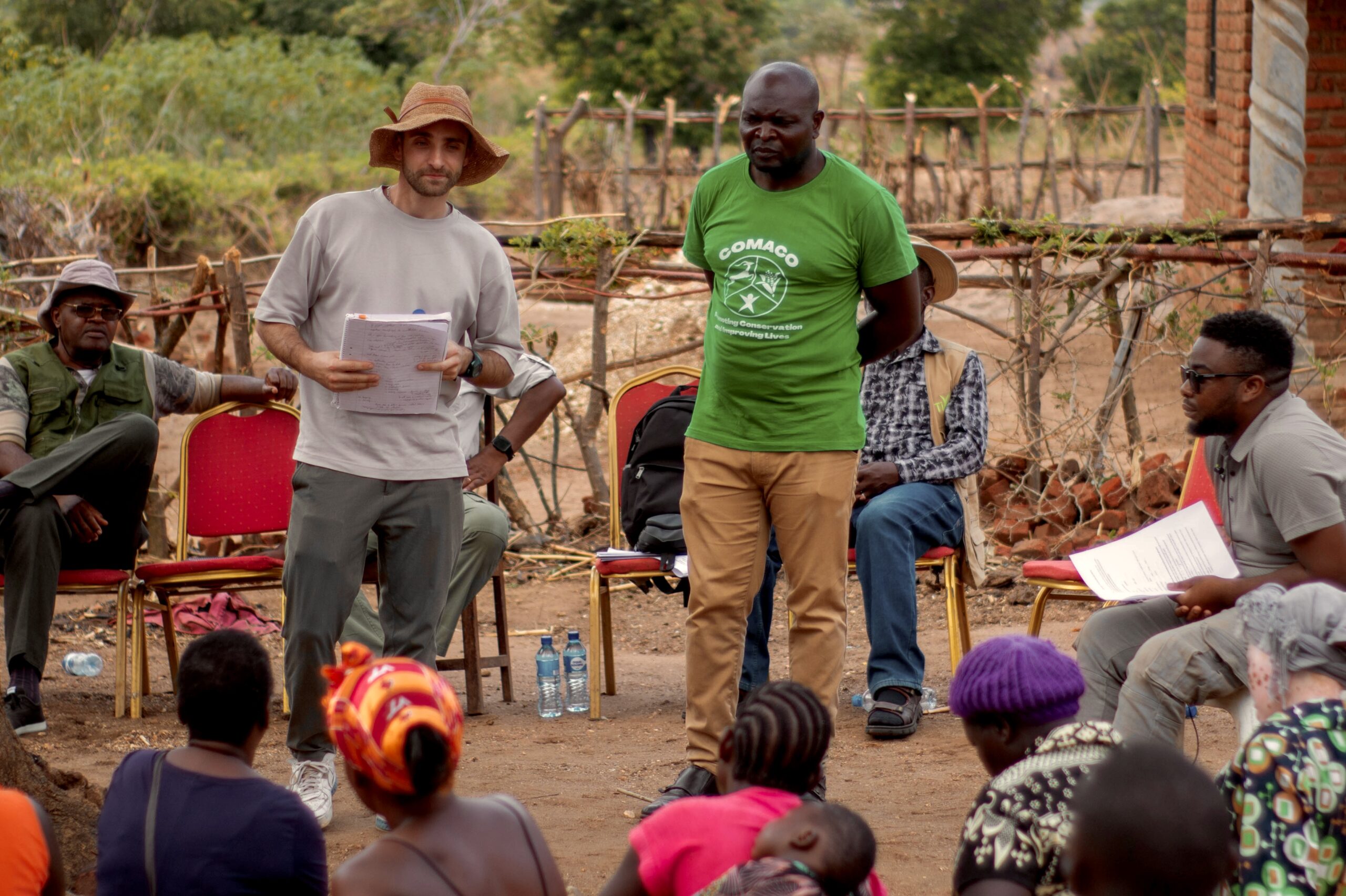
In November 2025, partners from Malawi (TIYENI), Zimbabwe (FACHIG and CTDT), and Zambia (COMACO), together with representatives from the Government of Zambia, CIFOR-ICRAF, and SIWI, gathered in Zambia for a Regional Technical Capacity-Building Workshop.
The objective was clear: move from piloting practices to aligning strategies for scale.
From practice to proof
The workshop opened with exchange across countries, showcasing locally developed solutions already delivering measurable results.
In Zimbabwe, the Pfumvudza system — a government-initiated rainfed agricultural practice blending conservation and precision agriculture — has consistently outperformed conventional farming. FACHIG’s field data collection, from 2022-2024, delivered higher yields and stronger resilience. During the severe 2023/24 drought, yield losses were limited to just 1.5 percent, compared to 5 percent in conventional plots.
CTDT presented an integrated model combining water harvesting, conservation agriculture, and community seed banks. Their Return on Investment analysis showed conservation agriculture generating six times higher ROI than conventional systems. At the same time, they highlighted persistent policy barriers, including limited recognition of farmer-managed seed systems and insufficient financing for agroecological transitions.
In Malawi, TIYENI’s Deep Bed Farming agroecological NbS tackles soil compaction by breaking hardpans. A three-year pilot demonstrated an average ROI of 131 percent, compared to 25 percent for conventional ridges, while nearly doubling yields.
These are not marginal gains. They represent systems capable of transforming rainfed agriculture.
Strengthening governance and scaling pathways
Technical sessions shifted focus from field practice to governance and scale.
CIFOR-ICRAF introduced the Watershed Management Protocol Application (WAMPA), combining modelling tools such as RUSLE with stakeholder validation to develop actionable watershed management plans.
Sessions on climate adaptation technologies explored scaling models for rainwater harvesting through farm ponds, including tailored financing approaches and the Build, Manage, and Transfer business model. Conservation agriculture in Zambia — built on permanent soil cover, crop rotation, and minimum soil disturbance — has already been adopted by over 250,000 farmers, demonstrating that scale is possible with the right policy support.
Participants also emphasized the need for harmonized monitoring systems that track soil health, water dynamics, socio-economic outcomes, and institutional performance. Without credible, comparable data, scaling and investment remain constrained.
Field evidence: resilience in practice
Field visits reinforced the technical discussions.
At a COMACO-supported farm integrating Gliricidia trees with crops, farmers described multiple benefits: improved soil fertility, better moisture retention, and diversified income from seeds and honey, to name a few. During the 2023/24 national drought, this agroforestry system produced a harvest while neighbouring farms experienced total crop failure.
A Community Forest Management Group protecting 11,800 hectares demonstrated how carbon finance can fund boreholes, farm inputs, and forest patrols — directly linking conservation with livelihoods. The potential for ecotourism offers further opportunity to diversify income streams.
Key messages from Zambia
Four conclusions emerged clearly:
- Nature-based Solutions are profitable and scalable. They simultaneously increase yields, strengthen soil and water systems, and enhance biodiversity.
- Farmers must be treated as partners. Peer learning and co-research accelerate adoption and ensure long-term sustainability.
- Data is strategic infrastructure. Harmonized monitoring is essential to unlock finance and build credible investment cases.
- Policy and financing gaps remain critical constraints. Mechanization access, seed system reform, cross-border water governance, and blended finance models must advance in parallel with field practice.
Next steps for scaling impact
As TIARA approaches completion, partners identified concrete next steps: finalizing the Triple Bottom Line assessment, publishing scientific evidence on soil and water metrics, and producing a policy brief to strengthen the investment case for rainfed agriculture.
Discussions are also underway to secure funding for a potential second phase, including engagement with IKI and the Global Environmental Facility.
The message from Zambia is clear: improving green water management is not optional. It is essential for climate resilience, food security, and rural livelihoods across the Zambezi Basin.
The solutions exist. Scaling them now depends on sustained collaboration, stronger evidence, and targeted investment.

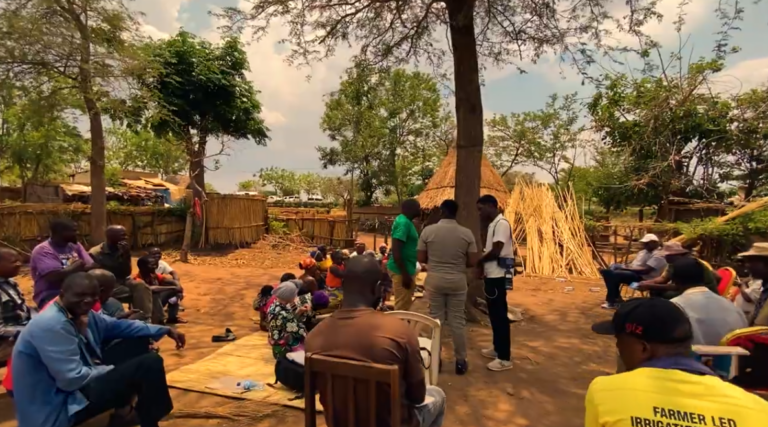
On the ground in Zambia: What scaling resilience looks like
Click here to watch the video
- Water-smart business
- Swedish Water House

- World Water Week
- Water governance
- Water in landscapes