As the global community marks World Water Day 2026, attention is turning from ambition to delivery. Across climate, biodiversity, and development processes, the challenge is no longer defining goals, but ensuring they are implemented in ways that improve people’s lives. In this context, turning water commitments into tangible progress has become the defining task of the year.

Water determines whether communities can thrive, economies can function, and societies can remain resilient in a changing climate. Reliable water systems underpin food production, energy transitions, public health, and urban development. Yet in 2026, the defining question for the global water agenda is no longer what commitments have been made. It is whether those commitments are being delivered in practice.
Over the past decade, governments and institutions have adopted ambitious goals for water security, sanitation, ecosystem protection, and climate resilience. These commitments are reflected across international frameworks — from climate and biodiversity processes to development and finance agendas. The challenge now lies in implementation.
Structural barriers to progress
Persistent barriers continue to slow progress. Governance remains fragmented across climate, biodiversity, land, and finance processes, even though water connects them all. Too often, water is treated as a sectoral issue rather than as the systemic foundation of economic stability and social well-being. Decisions affecting water resources are made in silos, limiting coherence and undermining long-term resilience. Weak governance can also enable corruption and abuse of power, undermining the rule of law and leading to inequitable water management and unreliable service delivery.
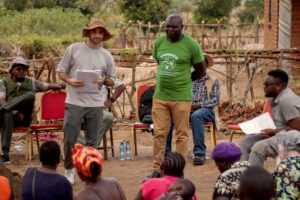
Exclusion remains a structural barrier to effective water governance. Water issues are inherently gendered — the water security at household level falls disproportionately on women and girls, even while women remain underrepresented in decision-making about water resources. Gender relations are shaped by political, legal, cultural, economic, and social norms, and intersect with poverty, ethnicity, age, disability, and other factors to influence who has access to services and who benefits from them. Unless these dynamics are addressed, policies risk reinforcing existing inequalities rather than dismantling them. Gender equality and broader inclusion are not peripheral concerns; they strengthen governance by ensuring that diverse perspectives inform the decisions that shape water systems.
Evidence, innovation, and momentum
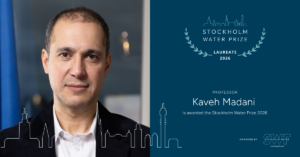
Recent global assessments reinforce this shift from ambition to delivery. Evidence emerging in international reporting on water highlights persistent service gaps and uneven progress. Scientific innovation continues to advance, as reflected in the work recognized through the Stockholm Water Prize. New approaches to water stewardship and sustainable investment are also gaining momentum. The knowledge and solutions exist. The central question is how locate they are translated into coherent systems that function across sectors and scales.
Implementation happens between and through global moments
Implementation is shaped both between and through international conferences. Global moments such as World Water Week, the UN Climate Conference (COP) in November, and the upcoming UN 2026 Water Conference in December provide essential platforms for dialogue, alignment, and political direction. They bring actors together, surface emerging priorities, and help shape collective ambition.
But progress does not depend on conferences alone. It depends on what happens in the months leading up to them and in the follow-up that follows. Investment decisions, regulatory reforms, institutional coordination, and cross-sector partnerships determine whether commitments are realized. These choices influence whether water governance strengthens resilience and supports inclusive economic development — or whether fragmentation and short-term priorities continue to delay delivery.
How SIWI connects evidence to action
SIWI operates across this continuum. Through year-round analysis of emerging water trends, advisory engagement in international policy processes, and dialogue with public and private actors, SIWI works to connect evidence with decision-making. By convening World Water Week as a leading global platform for water dialogue, SIWI supports the convergence of knowledge, coalitions, and solutions — and the movement of ideas forward into broader policy processes.
The real measure of progress in 2026
As preparations advance toward the UN 2026 Water Conference and related global processes, clarity of purpose is essential. New declarations alone will not determine success. What will matter is whether governance becomes more coherent across sectors, whether finance aligns with long-term water security, and whether implementation reaches those who have historically been left behind.
Turning water commitments into progress for people and nature requires sustained cooperation, informed political choices, and the willingness to address structural barriers. It also requires treating water not as a narrow sector, but as the systemic foundation of climate resilience, ecosystem health, economic stability, and social equity.
In 2026, the real test of water leadership lies in delivery. The work to meet that test is already underway — across institutions, communities, and international processes. Ensuring that it leads to tangible progress for people and remains the shared responsibility of governments, businesses, civil society, and knowledge institutions alike.
- Water-smart business
- Swedish Water House
- World Water Week

- Water in landscapes

- Water and climate
- World Water Week
- Water governance