Stay informed
SIWI newsletter
Receive SIWI’s latest news, events, reports and jobs directly in your inbox.
You can unsubscribe at any time.

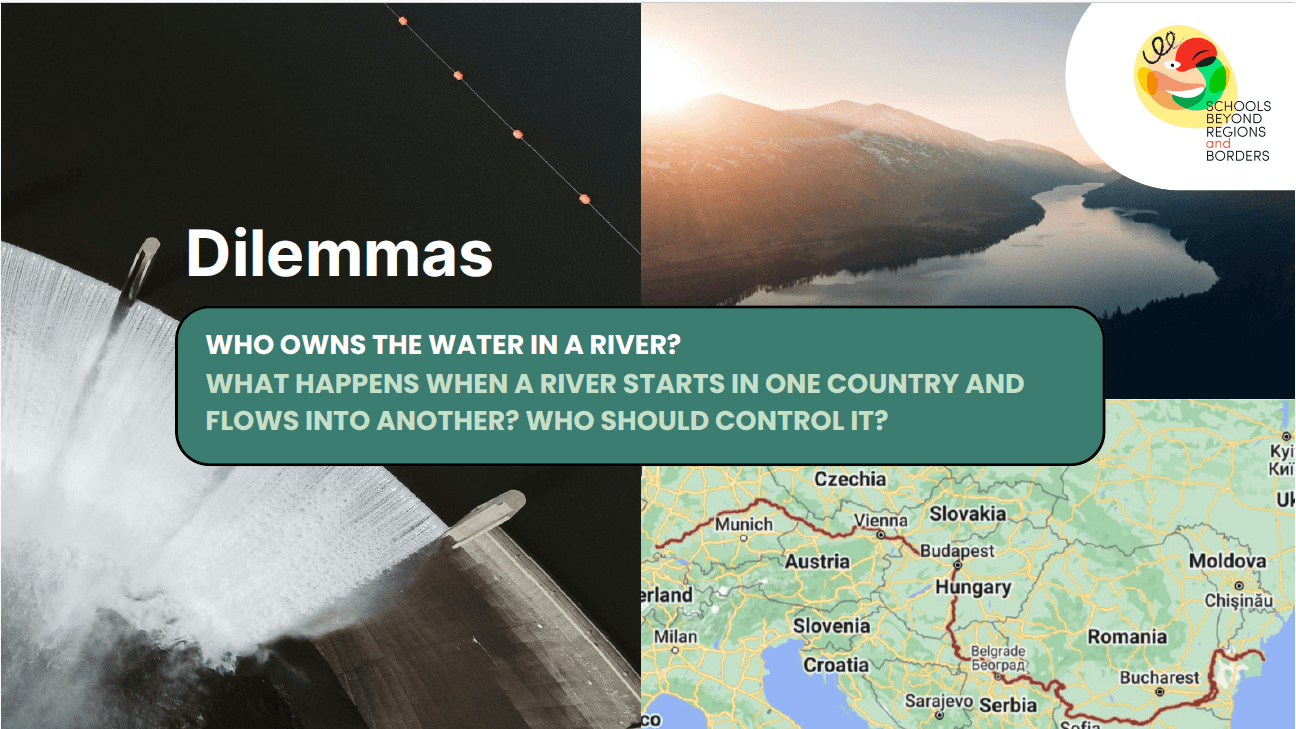

The materials were developed to accompany a webinar led by SIWI’s Martina Klimes, where students explored how countries manage shared rivers and how water diplomacy can help transform potential conflicts into cooperation. The session also prompted many insightful and highly relevant questions from students, underscoring both the complexity of the topic and the strong engagement it generates. They are designed to extend that learning into the classroom, allowing students to engage more deeply with the concepts introduced in the session.
The package includes a lesson plan, student handouts, role-play materials, and facilitation tools designed to guide students through a simulated transboundary water conflict. Using the fictional “Blue River” scenario, students explore the perspectives of upstream and downstream countries, debate competing needs around water, energy and food security, and work towards negotiated solutions .
Through these exercises, students engage with key concepts such as water scarcity, river basin dynamics, and international cooperation. They also develop practical skills in argumentation, negotiation, and collaborative problem-solving, moving from debate to dialogue and agreement.
The materials are designed for use in secondary education and can be adapted across subjects including geography, civic education, and global studies. They can be delivered as a full lesson or integrated into shorter sessions focused on debate or negotiation.
Together, these resources offer a practical way to introduce the principles of water diplomacy and highlight how shared water resources can become a basis for cooperation.
Explainers and briefs·Sep 14, 2026

Explainers and briefs·Jul 16, 2026
Explainers and briefs·Jun 27, 2026
Explainers and briefs·Jun 17, 2026