
SIWI Reflections 2025: Shaping water resilience through European policy
SIWI Reflections 2025 is a series highlighting what made the year meaningful across SIWI’s work. Through personal reflections from staff and collaborators, the series explores impact, learning, and what we are carrying forward into the future.

What was the most meaningful thing you or your team worked on in 2025?
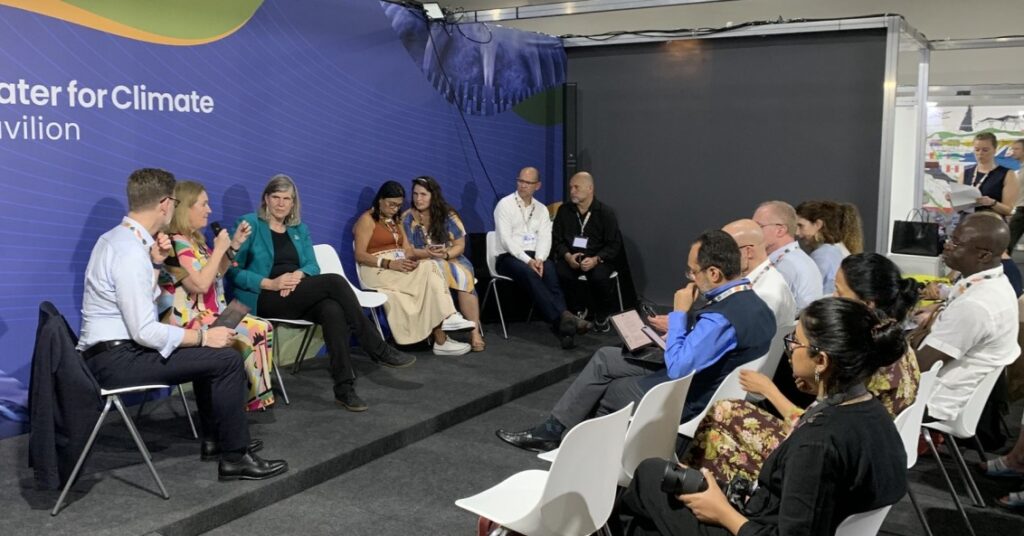
Looking back on 2025, the most meaningful work for me and my team was our engagement around the EU Water Resilience Initiative. Through our partnership with the European Economic and Social Committee (EESC) and Water Europe, SIWI contributed expertise and input into a process that ultimately led to the European Parliament’s decision on the EU Water Resilience Strategy in June 2025, under the leadership of Commissioner Roswall.
This work stands out because it reflects how SIWI operates at its best: combining long-term partnerships, trusted expertise, and sustained engagement to help shape policy processes over time. Rather than responding to a single consultation or moment, we were part of an ongoing dialogue that helped bring water more firmly into Europe’s strategic thinking on resilience, competitiveness, and security.
Why did it matter — what difference did it make, or will it make?
Water resilience is no longer a future concern — it is a present and growing challenge. By 2030, global water demand is expected to exceed available resources by around 40 percent. In Europe, this pressure is already visible through increasing droughts, floods, and water-related risks affecting communities, ecosystems, and economies.
The EU Water Resilience Strategy matters because it addresses these challenges in a more integrated way. It highlights the need to improve freshwater governance, strengthen preparedness for water-related disasters, and support more water-smart, innovative, and competitive societies. Importantly, it also recognizes water as a cross-cutting issue that underpins climate adaptation, energy, food systems, and economic resilience.
By promoting water resilience through international partnerships and cooperation, the strategy positions the EU as a global benchmark. This reinforces Europe’s role in the global water and climate community and creates opportunities to align European action with international processes and shared challenges.
What are you excited to take forward into 2026?
Looking ahead, 2026 is shaping up to be a true water year. With the UN Water Conference, major international climate and biodiversity processes, and continued EU-level implementation of the Water Resilience Strategy, there is a real opportunity to build on the momentum from 2025.
What excites me most is bringing ongoing collaborative dialogues forward — not only at the global level, but also by strengthening SIWI’s presence and influence in the Nordics and across the EU. By continuing to connect policy, practice, and partnerships, we can help ensure that water resilience remains central to Europe’s response to climate change and broader societal challenges.