

Why sharing data matters for water cooperation in the Juba–Shebelle Basin
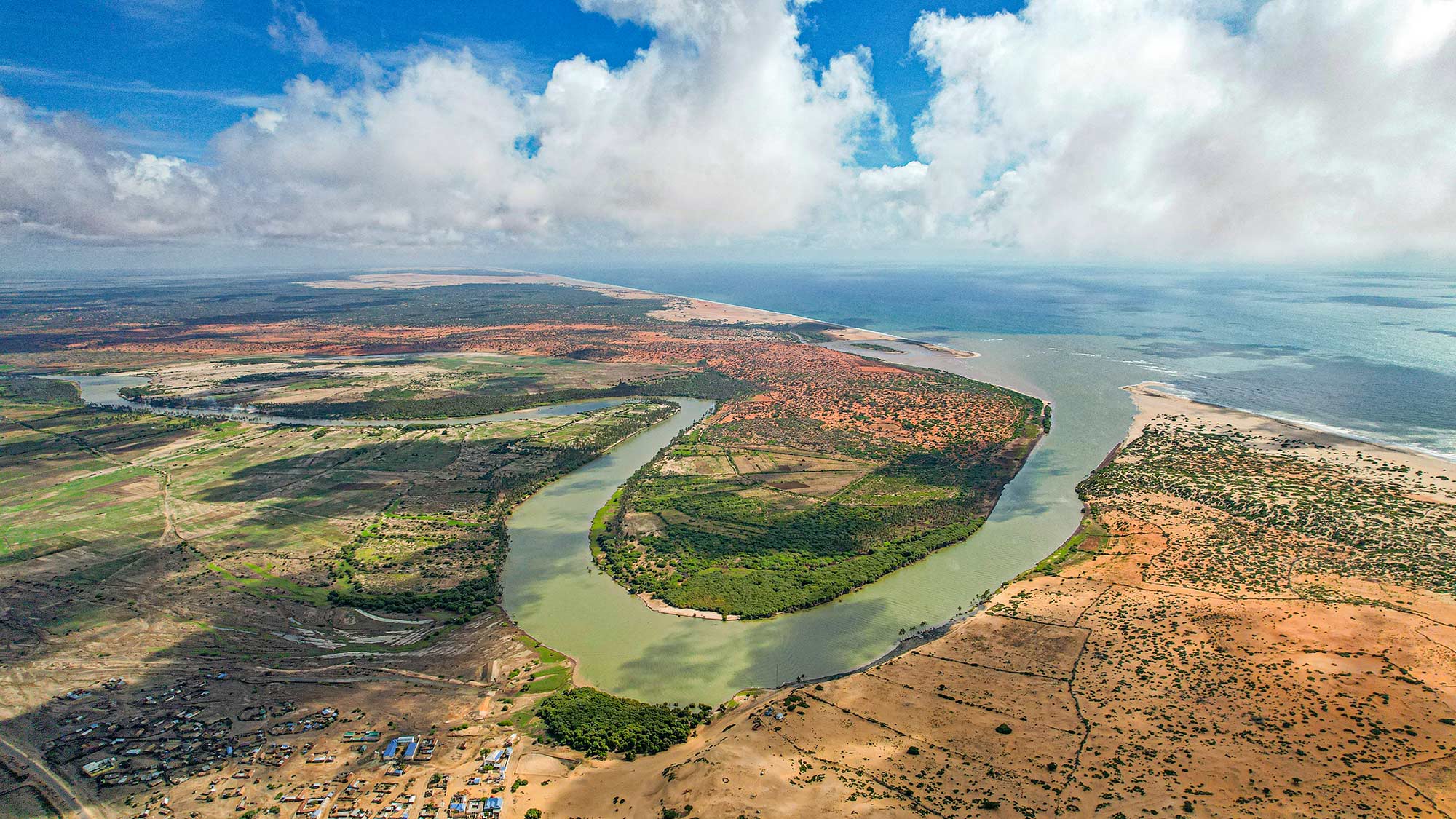
Commissioned by the International Centre for Water Cooperation (ICWC), this SIWI study shows that stronger water cooperation in the Juba–Shebelle Basin starts with functioning domestic data systems. Strengthening how knowledge, information, and data are shared within Ethiopia is a necessary first step toward more effective transboundary collaboration with Somalia.
The Juba–Shebelle Basin stretches across Ethiopia, Somalia, and Kenya, covering more than 800,000 square kilometres. Around 20 million people depend on its rivers for farming, livestock, drinking water, and income. The rivers originate in the Ethiopian highlands and flow toward Somalia. The Juba reaches the Indian Ocean, while the Shebelle often disappears into wetlands during dry seasons.
The basin’s climate is highly variable. Rainfall is higher in Ethiopia’s highlands and significantly lower in Somalia’s southern lowlands. This uneven distribution makes downstream communities particularly dependent on upstream flows. Agriculture and pastoralism sustain nearly 70 percent of the basin’s population, leaving livelihoods highly exposed to water variability.
Climate change is intensifying both droughts and floods. In Somalia and parts of Ethiopia, water scarcity fuels local conflicts and competition over resources. Flooding, often driven by upstream land-use change and deforestation, further compounds vulnerability. Managing these risks requires coordinated action across borders, across federal, regional and local governments, and sectors. Yet cooperation remains weak, and one reason is fragmented data systems.
From data to decisions
Water governance depends on more than infrastructure. It depends on information.
Data in water management can include rainfall measurements, river levels, and land-use maps. When processed, this data becomes information, such as flood forecasts. Over time, through experience and practice, it becomes knowledge. A “data supply chain” describes how this knowledge, information, and data move from collection to analysis and use.
In the transboundary Juba–Shebelle Basin, this chain is often broken. Data is scattered. Systems are not interoperable. Communication between institutions is inconsistent. Decisions are delayed or misaligned.
To address this, SIWI applied a Knowledge, Information, and Data (KID) Supply Chain Collaboration Framework tailored to the basin shared by Ethiopia and Somalia. The framework is structured around three building blocks.
The first focuses on the enabling environment. Effective collaboration requires adequate IT resources, interoperable systems, and trust-based relationships. Without these foundations, information flow remains constrained, and stakeholder goals remain misaligned.
The second examines the collaborative processes themselves. An effective KID supply chain ensures accessible data, synchronized decision-making, aligned incentives, open communication, and joint knowledge creation across sectors and governance levels.
The third looks at outcomes. When collaboration works, institutions benefit from improved efficiency, flexibility, innovation, and higher-quality decisions. Ultimately, this translates into better water management and stronger resilience.
What the study found in Ethiopia
The study focused on the Ethiopian part of the basin and engaged 115 leaders from federal ministries, regional Somali government bureaus, district administrations, NGOs, and research institutions. Using a structured questionnaire, it assessed institutional capacity and collaboration across governance levels.
The results show significant variation.
Federal agencies and research institutions generally scored highest in capacity. Local governments scored lowest. Trust between institutions is limited. Systems are poorly connected. Decision-making processes are slow.
Three core challenges stand out.
First, limited long-term orientation. Local governments and NGOs often focus on immediate operational pressures due to limited funding and staffing. This reduces incentives to engage in basin-wide initiatives that require sustained collaboration.
Second, the absence of a cohesive vision. Water management priorities are fragmented across sectors such as agriculture, energy, and urban development. Without shared goals, national strategies and local implementation often diverge, weakening vertical collaboration.
Third, low commitment to collaboration. Stakeholders frequently prioritize organizational mandates over joint basin-wide objectives. This undermines both horizontal integration across sectors and vertical alignment between national and local levels.
The consequences are tangible. Fragmented planning reduces overall impact. Duplication of efforts wastes scarce resources. Opportunities for innovation and coordinated flood and drought responses are missed.
Fixing cooperation from the inside out
The study points to a clear conclusion: transboundary cooperation cannot be built on weak domestic systems.
The IOS-enabled KID Supply Chain Collaboration Framework proposes an inside-out approach. This means strengthening Ethiopia’s internal governance structures, technological infrastructure, and stakeholder coordination before expanding cross-border collaboration with Somalia.
Ethiopia’s current underperformance signals limited readiness for effective regional cooperation. Without strong internal data-sharing protocols, aligned decision-making processes, and efficient information flows, cross-border exchanges risk being symbolic rather than functional.
Strengthening internal systems would improve Ethiopia’s capacity to engage constructively with Somalia on shared challenges, from flood warnings and drought monitoring to water allocation during periods of scarcity. It would also reduce the risk of disputes and enhance Ethiopia’s credibility in multilateral negotiations.
Once internal coordination is robust, external cooperation becomes more feasible and more meaningful.
Why this matters beyond the basin
The Juba–Shebelle Basin is not unique. Around the world, transboundary river basins face increasing pressure from climate change, population growth, and competing water demands.
A prerequisite for effective transboundary governance is the reliable sharing of knowledge, information, and data across sectors, governance levels, and borders. Without functioning domestic data supply chains, international agreements remain difficult to operationalize.
By identifying constraints in the flow of knowledge, information, and data, this study offers practical insights for strengthening upstream-downstream cooperation. The KID Supply Chain Collaboration Framework provides a scalable model for integrated water resources management in other basins facing similar challenges.
Water cooperation is often framed as a diplomatic issue. But at its core, it is also an institutional and technical one. If data does not move, cooperation does not move.
Strengthening the flow of knowledge, information, and data is therefore not a technical detail. It is the foundation for more resilient, peaceful, and sustainable management of shared waters.


- Water and climate
- Water governance
- Water in landscapes

- Water-smart business
- Swedish Water House

- World Water Week

- Water governance