Receive SIWI’s latest news, events, reports and jobs directly in your inbox.
You can unsubscribe at any time.

World Water Week
Over 35 years, World Water Week has evolved from a small scientific gathering into a global meeting place, reflecting changing water challenges, new voices, and expanding forms of collaboration.
Receive SIWI’s latest news, events, reports and jobs directly in your inbox.
You can unsubscribe at any time.
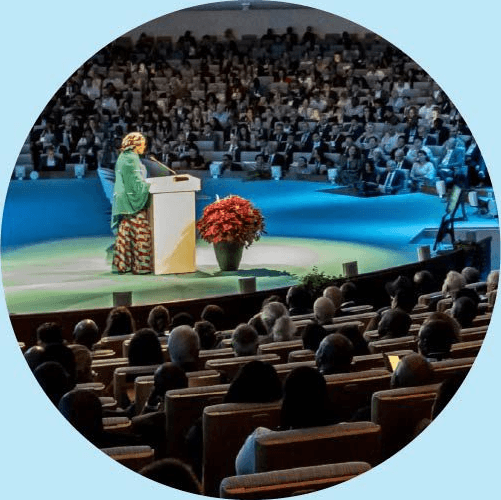
The inaugural Stockholm Water Symposium brought together 500 water experts as part of the Stockholm Water Festival, celebrating the Swedish capital’s achievement in making its waters some of the cleanest in the world.
The Stockholm Junior Water Prize launched as an international competition for students aged 15-20. Eight countries participated in the first year, laying the groundwork for what would become a global youth initiative.
The scientific conference evolved into a larger event to include more perspectives and to tackle a broader range of issues related to water.

The Stockholm International Water Institute (SIWI) offcially became an independent foundation under its current name.
World Water Week starts specifically engaging young people throughout the programme and the event at large.

The YSPC was launched for young professionals aged 35 and under. That year, World Water Week reached over 100 sessions and began broadcasting live sessions.
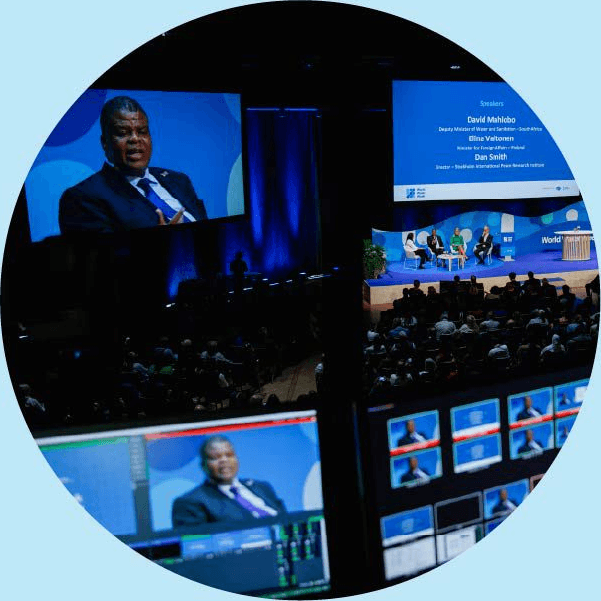
World Water Week increased its digital presence with 13 sessions live streamed globally. The event also implemented “Greener Meetings” strategy to work more consciously with sustainability, including no red meat and less waste.
World Water Week celebrated 25 years of convening global experts, organizations and changemakers to advance dialogue and develop solutions to the world’s greatest water-related challenges.
A quality benchmark was launched to promote meaningful inclusion. Initially focusing on gender and youth, the standard has since grown to include a diverse range of perspectives.

Demonstrating a comm itment to sustainability, World Water Week eliminated all printed materials.

For the first time, the event was hosted at the Tele2 Arena, offering a larger space to accommodate its growing audience and expanded programming.

Due to global health concerns and travel restrictions, World Water Week was not held in 2020 for the first time since its inception.
In response to the pandemic, the event was held entirely online, allowing global participation despite ongoing restrictions.

Combining the best of both worlds, World Water Week introduced a hybrid model, offering both on-site and online participation options.
World Water Week moved to the Stockholm Waterfront Congress Centre. For the first time, on line participation was offered free of charge.