Stay informed
SIWI newsletter
Receive SIWI’s latest news, events, reports and jobs directly in your inbox.
You can unsubscribe at any time.

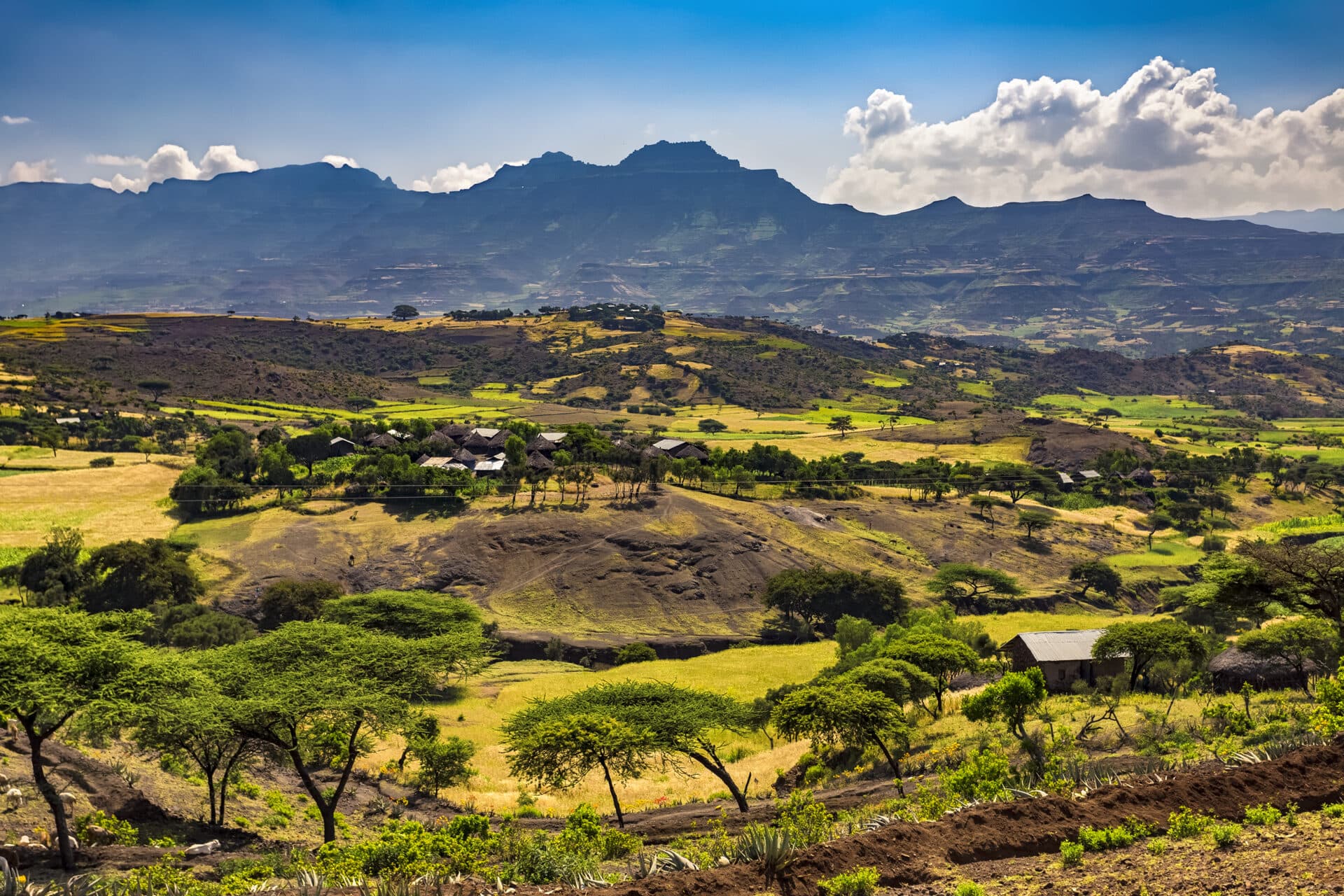



The authors of the article “Conflation of reforestation with restoration is widespread” claim that, across Africa, there is a misplaced focus on tree-based restoration in grassy ecosystems that risk converting what they describe as “ancient” non-forested ecosystems into forests. Central to the author’s critique is the FAO’s definition of forest (FAO 2018), which is based on tree cover, i.e., percentage of crown cover, height of tree species, and the area covered. They warn that this can lead to misclassifying open ecosystems with naturally low tree cover, such as savannas, as degraded forests, paving the way for misguided tree planting efforts.
In their analysis, the authors examine “restoration pledges under the African Forest Restoration Initiative (AFR100) and on-the-ground projects, by the World Resources Institute (WRI)”. More specifically, they use the Mongabay Reforestation database to identify and analyse restoration efforts that target tree-planting in savannas and other non-forest ecosystems in AFR100 countries. Their assessment of forest cover was conducted by comparing “ecoregions” assigned to different countries in the RESOLVE Ecoregions Map to their political commitment under AFR100. Based on their findings, they claim that a significant portion of the FLR efforts target areas with no or limited forest cover, suggesting a potential for large-scale tree planting in non-forest ecosystems.
This study has been challenged by other researchers and restoration practitioners, who question the approach and methodology in the article. Mamadou Diakhite (Manager of the AFR100 Secretariat) and Sean Dewitt (Director, Restoration at World Resources Institute) (Diakhitem and Dewitt 2024) raise that “multiple problematic assumptions form the backbone of the authors’ arguments”, and clarify that the principles of AFR100 clearly state that native grasslands should not be converted into forests. Furthermore, Mansourian et. al (2024) state that “this new article on the topic presents a number of biased statements and factual errors.”
Firstly, we note that the article has a very strict way of defining forest cover. Large areas in Africa that hold a low density of trees could benefit from FLR to restore ecological functions.
For example, the authors state that “Indeed, nearly a fifth of the total area pledged for forest landscape restoration (25.9 million ha) covers eight countries with no forest cover (Burkina Faso, Chad, Lesotho, Mali, Namibia, Niger, Senegal, The Gambia)”. Contrary to the authors’ claims, countries like Burkina Faso do have forest cover, such as agroforestry parklands where scattered multipurpose trees occur on farmlands as a result of farmer selection and protection, as confirmed by the FAO’s FRA data.
This underscores the significance of the word “and” in Forest and Landscape Restoration (FLR).
One example is the abovementioned parklands of Burkina Faso, where scattered trees play a key role for the livelihoods of rural people in the country. When managed well, they improve infiltration and soil fertility, while generating food, fodder, medicine, and several other ecosystem services. It is crucial that we include these kinds of ecosystems in water-smart FLR.
Secondly, the methods presented in the study to assess forest cover and restoration needs risk resulting in problematic assumptions regarding current land use and forest cover, and level of degradation. For example, remote sensing studies have shown an alarming decrease in forest cover of around 80% over the last half century in the Central Rift Valley in Ethiopia (Mekuria et al. 2021) and in the Upper Mekrou watershed in Benin (FORESTS4FUTURE – Benin, 2023). Their significant forest cover loss highlights the need for targeted restoration efforts in those areas.
Lastly, the authors fail to address how land use changes over time. Large savanna areas in Africa have, over time, become degraded and heavily eroded due to unsustainable land-uses, such as overgrazing, urbanization, and crop production, and have lost essential ecosystem services (Chirwa and Mahamane 2017; Kalema et al. 2015) . In such areas, the first step must be to restore ecological functionality to ensure water and food security, climate resilience, biodiversity, and livelihoods.
The Water-smart FLR (W-FLR) Tool, which is currently being developed at SIWI, examines opportunities to ensure that the hydrological aspects of FLR are accounted for and adapted to local conditions, for example by assessing optimum tree cover for water-related ecosystem services (Ellison et al. 2019; Bargués Tobella et al 2014 . That way, the W-FLR Tool methodology reinforces the importance of context-specific approaches in FLR. By emphasizing the need for context-specific restoration efforts that consider water ecosystem services, the W-FLR Tool aims to ensure that FLR initiatives are sustainable and successful in the short and long-term.