Stay informed
SIWI newsletter
Receive SIWI’s latest news, events, reports and jobs directly in your inbox.
You can unsubscribe at any time.

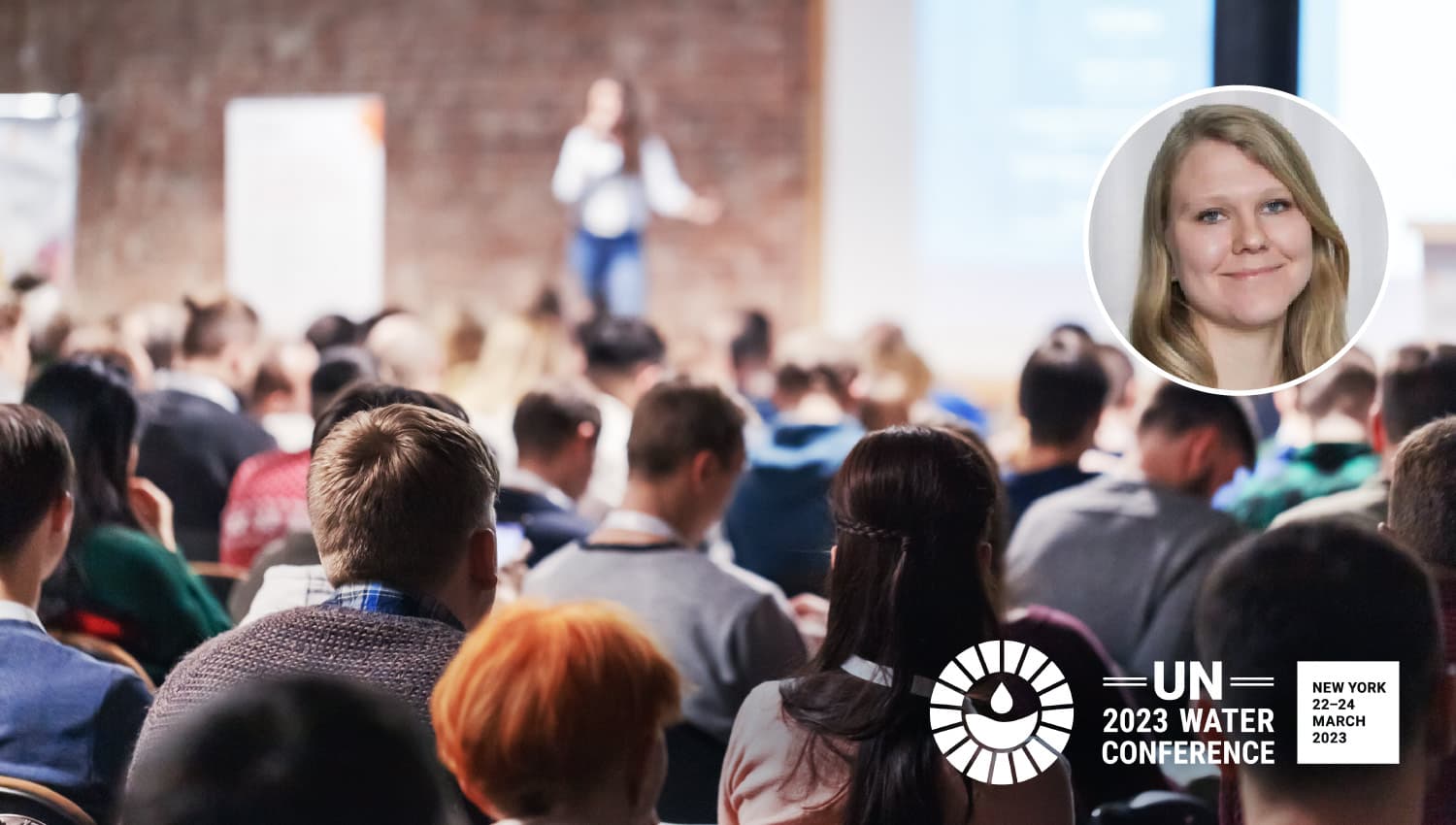
Tove Lexén is in New York to participate in New York Water Week and the UN 2023 Water Conference (22-24 March) as part of SIWI’s International Policy team. Much of her interest will be focused on the vibrant youth movement for water, which has gathered steam in the past decade and comes to New York with concrete demands for greater inclusion.
I would say the focus right now is much more about embracing the intergenerational perspective, as opposed to solely looking at including youth in decision-making. A comprehensive approach is required, to balance the contributions from both junior and senior water professionals if we are to advance the water goals. Included in this is acknowledging the fresh perspectives that young people have, such as innovative thinking, being solutions-oriented, and having ambition and drive. Young people are increasingly being recognized as more than just ‘young’, they bring with them important tools to solve the complex challenges we are facing.
In a session about the 30-30-30 initiative by the World Youth Parliament for Water that I attended earlier in the week, which focused on the consistent inclusion of people under 30 in decision-making and strategic positions, Henk Ovink, the Water Envoy from the Kingdom of the Netherlands, shared two reflections from his eight-year mandate period that I think are important to carry forward. He said that young people, by being provocative, have brought energy into the partnership between senior and junior water policy makers, which has undoubtably advanced actions. He also gave a task to young water professionals, to be part of forming the structure of accountability of the Water Action Agenda. I think his messages are cases in point for the trends we see now, where young people are acknowledged for their additional value and capacity to form part of crucial aspects on the international work on water.
I believe the biggest obstacles are:
To solve all the of the above, actors in the water sector need to be bold and dare to trust young people’s abilities. They also need to be open-minded and open to new ways of approaching problems, and not be stuck in formalities. There also needs to be a reformation of the educational system so it encourages young people to work in water and apply an interdisciplinary approach to their work. Furthermore, the work needs to be inclusive for everyone worldwide by providing resources for less privileged people to attend conferences, as well as developing virtual formats that allow remote participants to join on equal terms.
I think the most important shift we need for this to happen is to move away from only categorizing people based on their age or years of expertise and instead look at the different valuable perspectives they bring. By doing this we can move away from the stigmas and tensions, and instead apply a solutions-oriented mindset that everyone gains from.
I will be holding an intergenerational event during the conference, with the purpose of unpacking the structures and methods for intergenerational cooperation that could be widely applicable. I’m very excited about this event and what lessons it can bring.
I hope the conference will be a moment of bold commitments. I also hope that we will agree on a structure for how to follow-up on the Water Action Agenda to make sure the work proceeds and progresses.
I am engaged in several youth-related events in the New York Water Week Water House, such as the ‘Future is Now! – Intergenerational Changemakers on Water’ which took place on Monday 20 March.
I am also leading on two side events inside the UNHQ tomorrow, Friday 24 March.