Stay informed
SIWI newsletter
Receive SIWI’s latest news, events, reports and jobs directly in your inbox.
You can unsubscribe at any time.

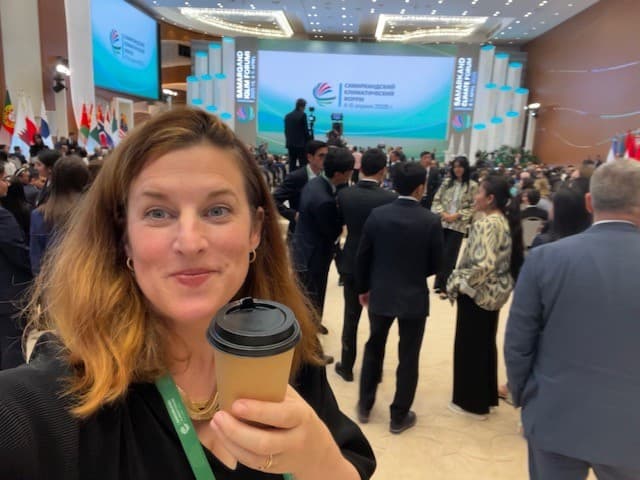

At SIWI, we’ve long believed in the power of transboundary water cooperation as a lever for both sustainable development and peace. That’s why our participation in Samarkand focused on climate and water diplomacy, with insights drawn from our flagship programme, Shared Waters Partnership. These discussions reinforced a central message: regional collaboration and diplomacy are no longer optional — they are essential. Shared water resources connect us, across borders, sectors and interests. Through science-based policy, open dialogue, and mutual trust, we can turn shared challenges into shared solutions.
The Forum also served as a stage for major announcements, including one that closely aligns with SIWI’s work on forest and landscape restoration. During the event, the Uzbek Ministry of Ecology, Environmental Protection and Climate Change, in partnership with the World Bank, launched the Uzbekistan Resilient Landscapes Restoration Project (RESILAND) — a landmark initiative backed by a $153 million investment.
Spanning six regions, the project aims to restore degraded lands and expand forest cover, while enhancing food systems, creating jobs, and promoting ecotourism. Just as importantly, it will foster transboundary cooperation to protect and restore shared ecosystems across Central Asia.
At SIWI, we see this as a vital step forward. Healthy forests support healthy watersheds, strengthen biodiversity, and build resilience from the ground up — all essential pillars of a sustainable, water-wise future.
In Samarkand, the message was clear: climate action must be rooted in collaboration, resilience, and inclusivity. As we move forward, SIWI will continue to work alongside partners in Central Asia and beyond to support regional dialogue, sustainable water governance, and the restoration of ecosystems that sustain life. This is how we build peace through water — and grow hope from the ground up.