Stay informed
SIWI newsletter
Receive SIWI’s latest news, events, reports and jobs directly in your inbox.
You can unsubscribe at any time.

When the UN Framework Convention on Climate Change (UNFCCC) was first formulated 30 years ago, there was no mention of water. Today we know much more about the pressure global warming is putting on the water cycle, not least after the most recent report from the Intergovernmental Panel on Climate Change.
SIWI participated in the climate conference COP27 6-18 November to raise awareness of this research and advocate for science-based climate strategies with water at the core. If water is not considered in climate planning, countries are likely to make costly policy mistakes that jeopardize the necessary fast transitions to low-emission societies.
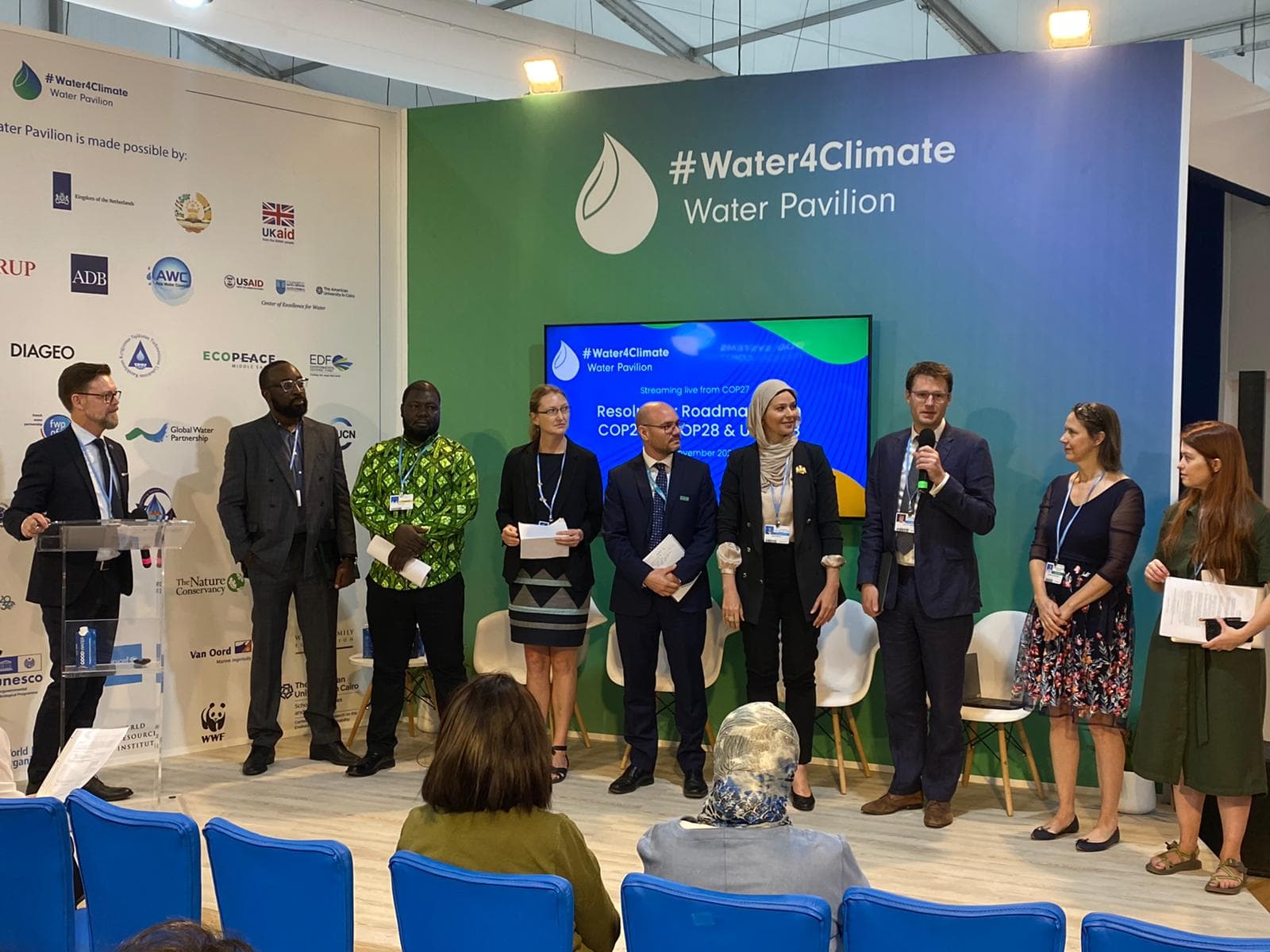
SIWI made an important contribution by launching a landmark report with the first-ever summary of current scientific knowledge about the role of water for climate mitigation. The work, involving five institutions, has been led by SIWI’s Dr Malin Lundberg Ingemarsson who presented the results in a session at COP27 together with other researchers including Professor Johan Rockström from the Potsdam Institute for Climate Impact Research. The report analyzes how water can contribute to more effective climate mitigation within for example landscape management, food systems, wastewater treatment and energy production.
In addition to releasing the report, Malin Lundberg Ingemarsson participated in other sessions, for example on the role of forests. SIWI’s Ruth Mathews and José Murillo took part in COP to share knowledge about climate-smart water management and the source-to-sea approach which has been met with great interest. The source-to-sea methodology is also mentioned in the report on climate mitigation as a best-case example.
SIWI’s Anton Earle participated in many discussions to raise awareness of the need to make investments available to smallholder farmers, not least non-irrigated farms in Sub-Saharan Africa who are hard hit by intensified drought. A couple of years ago, this might have been considered a fringe topic at a UNFCCC climate meeting, but COP27 had a pronounced Africa focus and was set against the backdrop of a growing hunger crisis. More and more research also show how water-smart farming can reduce greenhouse gas emissions.
When COP27 ended, it was clear that water had permeated the entire conference in a way not seen before:
The wording about water in the final declaration does however not reflect the real role of water for climate since it only refers to adaptation – it fails to mention how crucial water is also for mitigation. In the year ahead, SIWI will work tirelessly to make that knowledge more widely available so that more countries will place water at the heart of their climate strategies. Only then can we make the fast progress on climate that the world really needs.