Stay informed
SIWI newsletter
Receive SIWI’s latest news, events, reports and jobs directly in your inbox.
You can unsubscribe at any time.

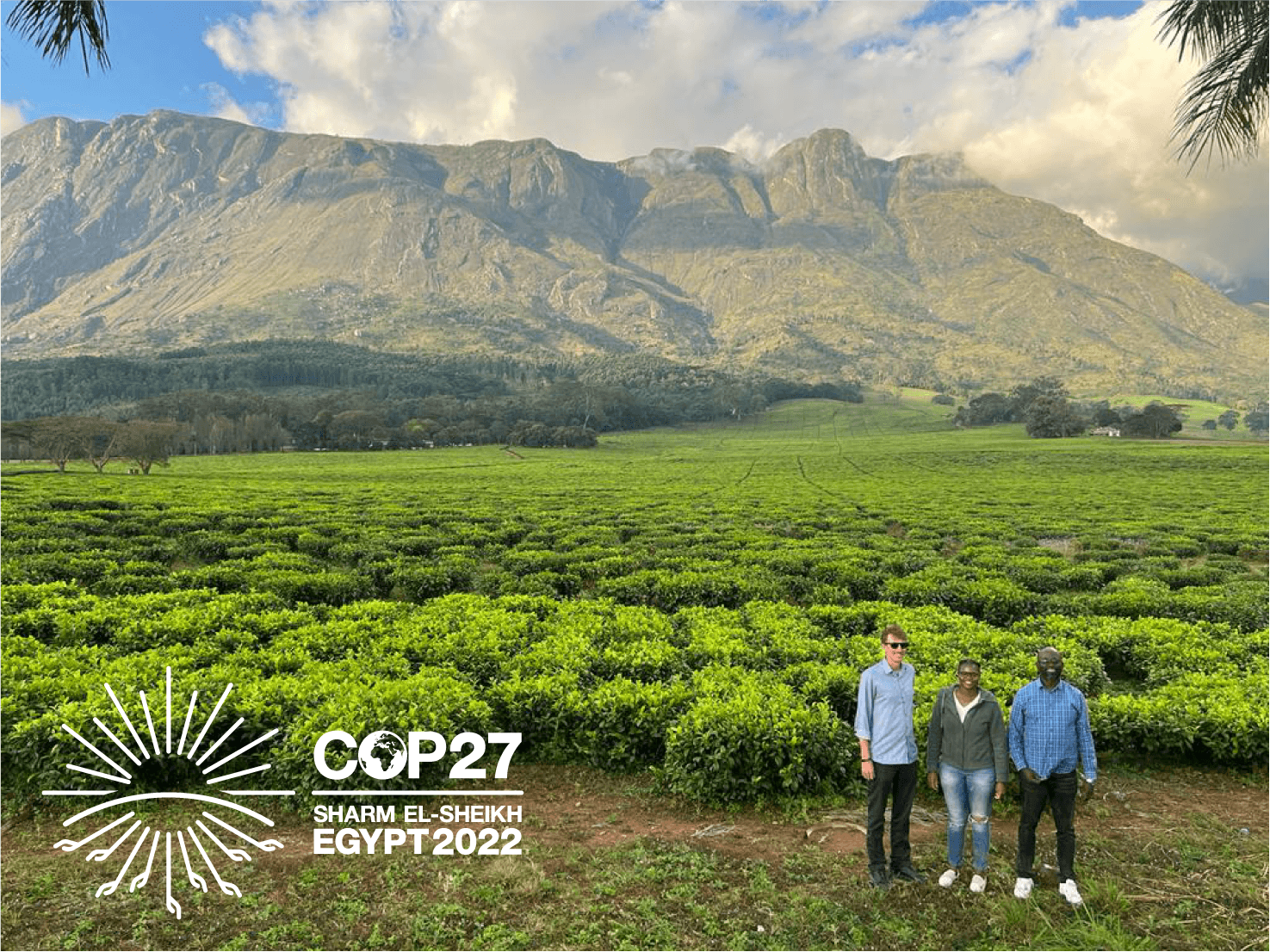
The African farmer is our frontline water manager, the actions she takes on her field impacts soil erosion, sedimentation and groundwater recharge. By improving the capture of rainwater on her field as well as the surrounding area – such as from rooftops, in sand dams and shallow aquifers, it is possible to increase the soil moisture content and make supplementary water available during dry spells.
Communities we work with across the Zambezi River watercourse consistently tell us the same thing – the climate has already changed. They can no longer farm in the way their parents, or their grandparents used to farm as the rainy season is shorter and consists of intense rainfall events, leading to periods flooding with dry spells in between. Essentially, climate change has speeded-up the hydrological cycle.
WATCH | Anton and his colleague Xanani speak about TIARA during World Water Week
Currently 95% of investment in African agriculture goes to irrigation, but 95% of farmers on the continent rely on rainfed farming.
The only part of the hydrological cycle we can influence is from when a drop of rain lands on the ground until it reaches the ocean. The time that drop spends on land can be increased by allowing it to sink into the soil, rather than rush into the nearest gully or river. In the soil, at root zone, is the only place where plants can absorb water, a simple realisation of profound consequence first described by Prof Malin Falkenmark in her coining of the term “green water”.
TIARA aims to strengthen the business case for investing in improved rainfed agriculture, supporting farmers to manage the soil and capture rainfall and ultimately improve household food security and resilience to climate change. Investing in improved rainfed agriculture has the added benefits of better soil and water conservation at catchment scale as well as stimulating local agricultural value chains, representing a triple bottom-line return on investment. The business case will make a compelling argument for governments in Africa, development finance institutions and the private sector to make substantial investments in the sector. This is of great consequence as currently 95% of investment in African agriculture goes to irrigation, but 95% of farmers on the continent rely on rainfed farming.
There needs to be a recognition by the international community that climate change is happening now, and its impact is making it increasingly difficult for local communities in Africa to produce the food they need to survive. Adaptation resources need to be made available at scale to support the majority of African farmers who rely on rainfall to water their corps, to invest in improving their agricultural production, increasing yields and reducing risk.
Establish funds at country level which can be accessed directly by local organisations and the private sector with the express purpose of supporting farmers to improve their rainfed agriculture and increase greenwater availability at farm level. Funds can be disbursed either as grants, micro-loans or risk coverage insurance.
12 Nov | 17h00 Africa Investment Programme High Level Panel launch event at the African Union (AU) Pavilion
14 Nov | 15h00 Accelerating effective solutions for biosaline agriculture event at the Islamic Development Bank Group (IsDB) Pavillion
16 Nov | 12h15 Empowered Climate Resilience: Women as change-makers for water-sensitive climate action at the Water Pavillion