Stay informed
SIWI newsletter
Receive SIWI’s latest news, events, reports and jobs directly in your inbox.
You can unsubscribe at any time.


At a time of growing water scarcity, most of these water resources are coming under greater pressure and the affected countries should have every incentive to improve water management. Various water diplomacy tools can be applied by external actors to contribute to water cooperation.
One of the main challenges of water dialogues is to build trust, which also requires a shared understanding of the issues at hand. It is essential that the political tracks of water diplomacy can draw on technical and scientific knowledge of water resources, ecosystems, energy production and other factors. While the importance of good water governance is increasingly recognized, the rapidly growing challenges related to increased water demand and climate-induced water variability can make it difficult for negotiators to identify which solutions should have the necessary political support. Diplomats and policy makers benefit from cooperating with scientists and water experts to create shared knowledge on how climate change impacts the hydrological cycle, so they can properly assess both risks and opportunities.
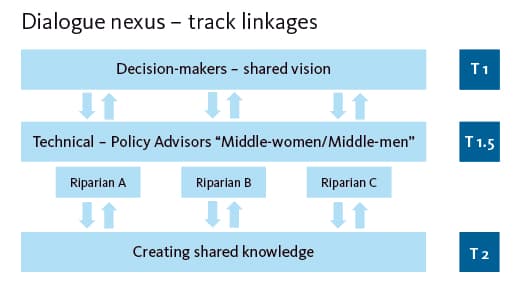
There are many tracks and tools to help stakeholders develop a shared understanding of the challenges faced by a region, including joint activities such as fact-finding missions, study tours, and scientific seminars. Dialogue mechanisms can be strengthened by having support from technical experts, researchers from different disciplines, and foreign policy actors who can support discussions on how different sectors and actors can work together more effectively. An open-ended question is how the water community can better support different water diplomacy processes that contribute to stability, community resilience, conflict transformation, peacebuilding, and regional cooperation.
There are many examples where non-state actors play an important role in bringing communities and decision-makers together around shared environmental objectives.
Facing an imminent environmental disaster can create momentum for a dialogue process and non-state actors can often play a vital role in building community support.
In recent years, more and more external actors with various roles and mandates, seek to support water dialogue processes. To play a constructive role, it is essential they have a good understanding of the causes of any armed conflicts or political tensions in the region, including to what extent they relate to water or not. In cases when competition over shared water resources is an underlying cause of the conflict, it is important to identify how different groups are impacted by the situation and who would derive benefit from sustaining the conflict. It is crucial that different external actors collaborate and apply knowledge from the most recent research and best-practice examples.
SIWI works actively to raise awareness of the benefits of transboundary water cooperation whilst strengthening the understanding of shared water resources, including the impacts of climate change. This creates an enabling environment for mutually beneficial collaboration.