Stay informed
SIWI newsletter
Receive SIWI’s latest news, events, reports and jobs directly in your inbox.
You can unsubscribe at any time.

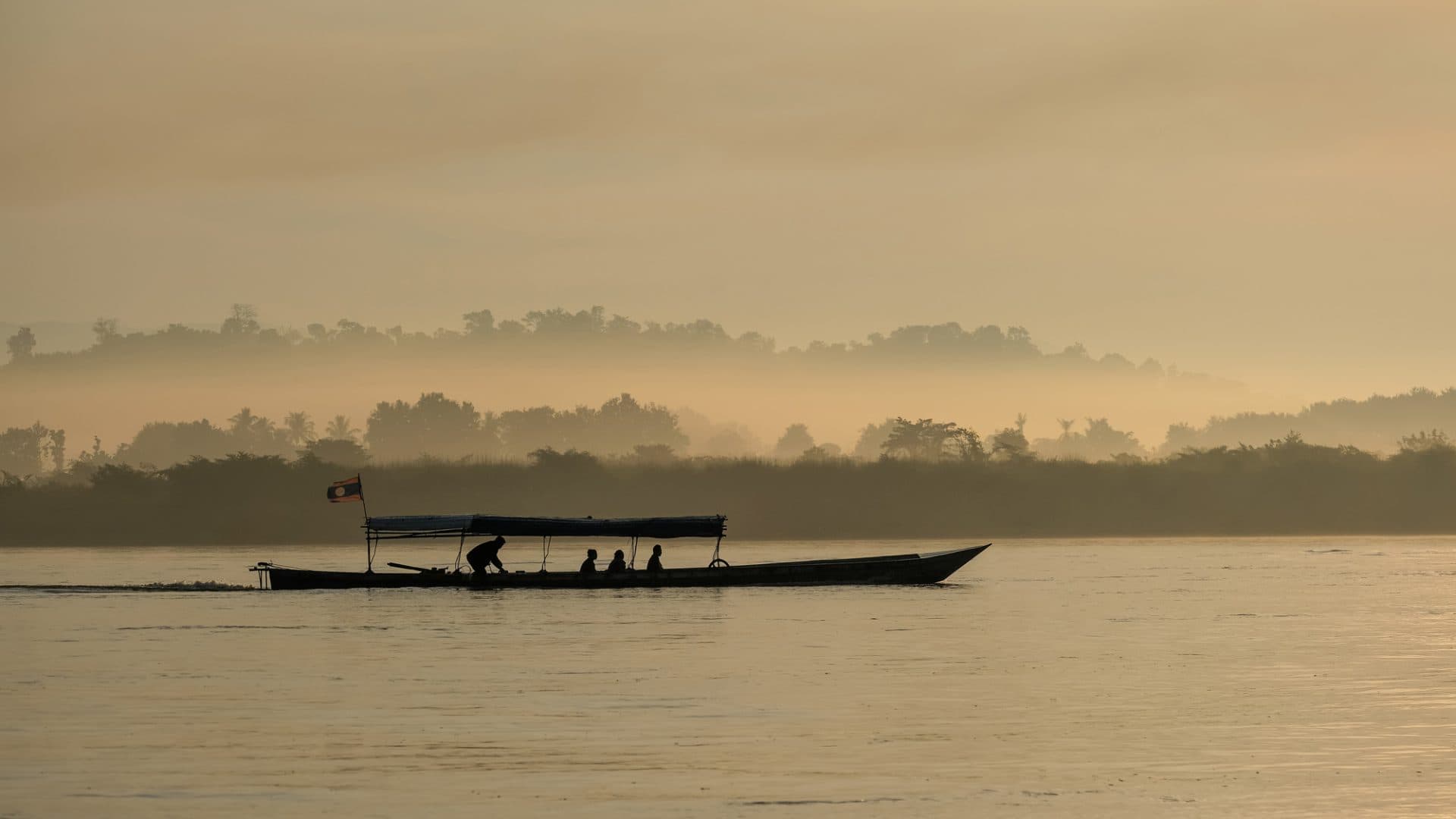
This autumn, SIWI and the International Centre for Water Cooperation (ICWC) will publish the first of their annual Water Cooperation Global Outlook reports. The reports will provide an up-to-date global assessment of water cooperation preparedness with a special focus on a particular region, this year’s region being Africa.
For these reports the researchers have developed a new approach for assessing global water cooperation, focusing on the collaborative actions of actors both within and between countries, and those building towards peace and development, as opposed to previous methodologies that have focused more on the potential for conflict.
We caught up with Håkan Tropp, the project lead, to find out a bit more about this novel approach.
The resolve of water challenges is getting increasingly urgent and complex. Water scarcity, water disasters, extreme weather events, and failures of climate change mitigation and adaptation continue to rank among the globe’s top risks, as assessed by the World Economic Forum’s Global risks report. Unless there is close cooperation across various sectors and stakeholders the chances of peaceful and sustainable water development remain slim.
A strong and systematic focus on water cooperation has been missing, and this initiative is filling that gap. It will develop systematic knowledge on the characteristics of water cooperation and contextualized insights on what works. The initiative was presented at the United Nation’s Water Conference, held in New York 22-24 April 2023 and the World Water Weeks in 2022 and 2023, with positive reactions from water decision-makers and managers around the world. A typical response we received is that the initiative will contribute to systematic knowledge development and a solutions-oriented approach to effective cooperation.
The world is off-track to meet many of the Sustainable Development Goals (SDGs), and SDG 6 – Clean water and sanitation for all – is no exception. Achieving many of the other SDGs is also highly dependent on water and achieving SDG 6. It will be difficult to achieve the hunger target, for example, without addressing the key role of water for food production – or to reach the targets for improved health without addressing water and sanitation.
Water cooperation is a key factor that contributes to the acceleration of SDG 6 implementation and other water-related SDGs such as poverty reduction, climate change, food security, and health. It is anticipated that the policy recommendations and cooperation innovation insights of the Outlook Report will contribute to increased awareness and action among water decision-makers to strengthen cooperation across sectors, stakeholders, and borders.
The United Nations is increasingly acknowledging the role of water cooperation and its transformative power to strengthen international water governance architecture, which currently is fragmented and weak. The recent United Nations Water Conference had water cooperation as one of its thematic pillars and reiterated the case for the need to improve cooperation at all levels. It encouraged integrating water into the Paris Climate Agreement and its implementation mechanisms, and to develop regional, national, and community cross-sector assessments about what can unlock cooperation for joint planning and investing in shared waters.
The Water Cooperation Global Outlook Initiative is a contribution to the Water Action Agenda of the United Nations Water Conference, which was developed to inspire and incentivize innovative actions to help achieve the SDGs.
Cooperation is a key aspect to meeting water challenges at all scales. Water unites people more often than it divides them – despite the impression given by the news media that it will lead to conflict.
Better water cooperation can lead to several positive outcomes such as improved climate change adaptive capacities to manage floods and droughts, increased agricultural yields, improved water quality, and more resilient ecosystems. Limited cooperation can, conversely, come with excessive costs as exemplified by the World Bank’s estimate that the difference between good and bad water governance could add up to more than 20 percent of Central Asia’s GDP by 2050.
Yet, while partnership and unity are important, water management and governance tend to be very fragmented and face great deficits in cooperation. Most countries around the world and international multilateral systems are at a crossroads about how far to deviate the path ahead away from business as usual. The new pathway is characterized by transborder cooperation across stakeholders, sectors, and scales – and taking it can help to accelerate the implementation of the 2030 Agenda and other international commitments such as the Paris Climate Agreement and the Sendai Framework for Disaster Risk Reduction.
The Outlook Report is assessing cooperation preparedness in a framework related to motivations and drivers of cooperation and a set of water cooperation factors that relate to: governance, leadership, joint programming, financing, data and information, and an enabling environment. Several drivers such as demographic change, socio-economic development, and increasing rainfall variability can drive water pressures and influence to what extent cooperation takes place and how.
Intriguingly, the framework assesses water cooperation at different scales: (i) water cooperation at national and subnational levels and (ii) transboundary water cooperation at basin level.
The developed assessment framework generates the information required for evidence-based learning that can inform policy options and management solutions for contextualized water cooperation.
The Water Cooperation Global Outlook Report assesses country preparedness to cooperate around water by analyzing the status and trends of water cooperation within and between countries, and draws policy and practice lessons. Based on this, the initiative contributes to supporting water decision-makers and managers around the world on cooperation solutions and innovations. The initiative aims to: