Stay informed
SIWI newsletter
Receive SIWI’s latest news, events, reports and jobs directly in your inbox.
You can unsubscribe at any time.


A platform for satellite-based monitoring can reveal how water is used across a landscape. A sustainable business and financing model can help a farmer access irrigation equipment. A community can bring knowledge that changes how a solution is designed. Each offers something valuable, but the greater opportunity lies in making them work together.
That is SIWI’s central interpretation of the innovations and approaches documented in its new report “Innovation and Solution, Insights from World Water Week 2026”. Progress depends on connecting useful ideas with the institutions, resources, and people needed to put them into practice.
The report draws on 429 answers to an open-ended post-event survey question asking participants which innovations, solutions or approaches they remembered most clearly. These responses offer a picture of what caught participants’ attention, rather than an assessment of which solutions deliver the greatest impact.
Make information useful for decisions
Digital tools featured prominently, including FAO’s WaPOR platform (Water Productivity through Open Access of Remotely Sensed Data), which uses satellite observations to assess agricultural water productivity, and the Water Availability and Demand Tool, which supports water and irrigation planning.
Their appeal suggests an appetite for information that helps people act. For SIWI, the important questions are who can use that information, what decisions it informs, and whether institutions have the capacity to respond.
A farmer, a water utility, and a government ministry may need different information and different support to use it. The value of a tool therefore depends on how well it connects with the people and decisions it is intended to serve.
This makes adoption a central consideration when developing and funding innovations. Alongside technical performance, attention should go to accessibility, capacity development and the responsibilities of those expected to act on the findings.
Make solutions accessible and affordable to use
Some of the approaches recalled by respondents change how people access a service. Irrigation-as-a-service and leasing models, for example, can reduce the upfront costs of accessing equipment.
This broadens the innovation question. Alongside asking whether a technology works, we should ask whether its intended users can access and afford it and whether the service can be maintained.
The report also records interest in blended finance, which combines public or concessional funding with commercial investment. SIWI’s view is that financing arrangements should be judged by their contribution to lasting services and outcomes, alongside the capital they attract.
As Sarah Nedolast, Program Manager for the Global Water Security and Sanitation Partnership at the World Bank, put it in a World Water Week interview: “I like to say that we need to get more water for the money that’s already there.”
That directs attention towards investment quality, delivery capacity and the enabling and practical conditions that allow resources to produce results.
Give people influence over the solution
Community ownership, Indigenous leadership and co-creation also featured in the responses. Their inclusion matters because it challenges a narrow understanding of innovation as a product developed by experts and delivered to users.
One survey respondent expressed the principle simply: “Design solutions with customers, not for them.”
For SIWI, this means treating participation as part of how a solution works. People need opportunities to shape priorities, contribute knowledge, and influence decisions about implementation and maintenance.
The same logic applies to landscapes. Respondents highlighted soil moisture management, regenerative agriculture and restoration, drawing attention to rainfall stored in soils and the land-use decisions that affect it.
Invest in the connections
The report offers practical examples, but its greater value may be the connections it encourages readers to make between them.
For funders, policymakers, and practitioners, SIWI’s recommendation is to examine the conditions surrounding an innovation as carefully as the innovation itself. Who will use it? Who will pay for it? Who will maintain it? What needs to change for it to become part of everyday practice?
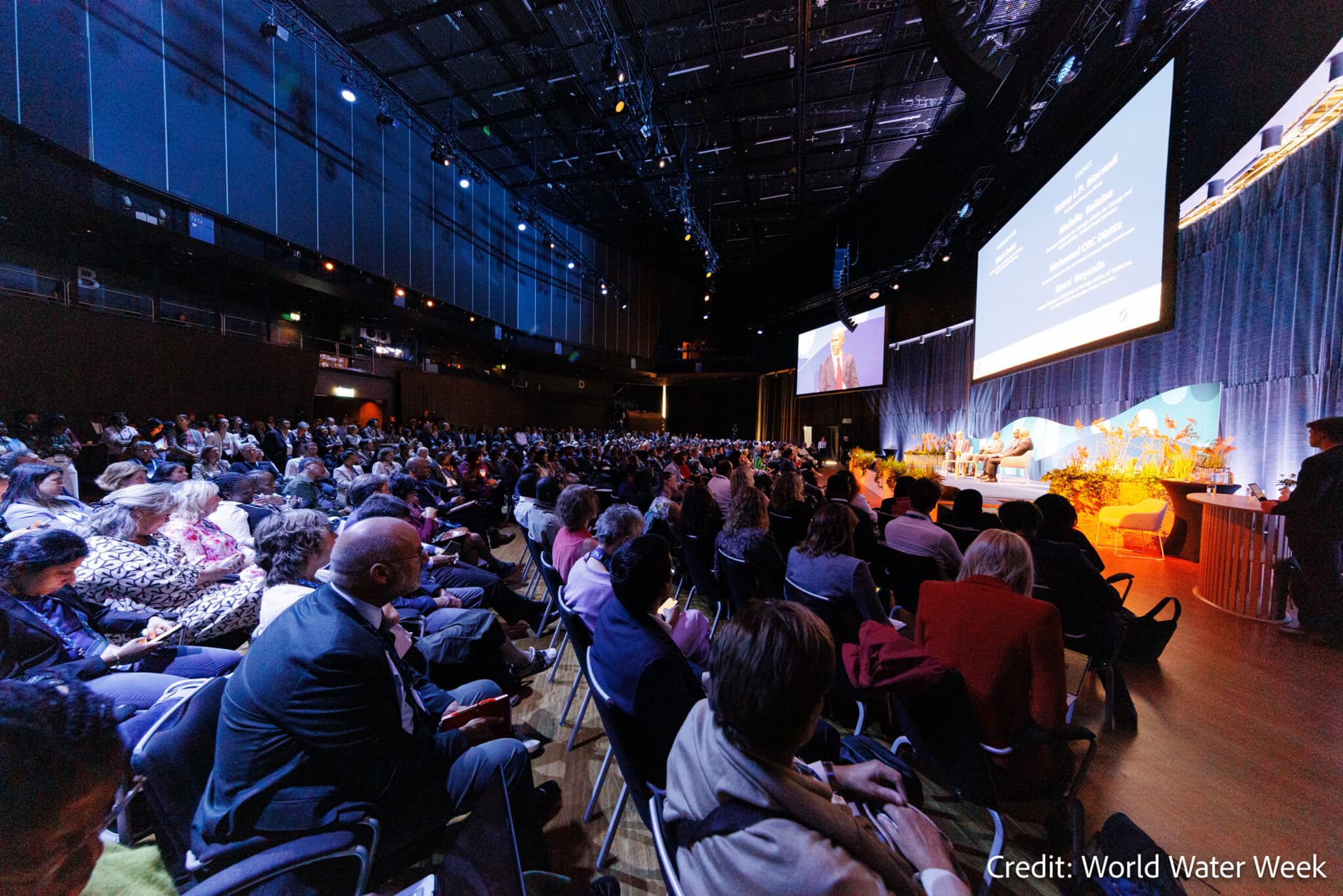
World Water Week provides a place to discover solutions and build the partnerships needed to put them into practice. The task is to carry that work forward, connecting promising ideas with the financing and governance that allow them to deliver.
Explore the tools, approaches and participant perspectives in SIWI’s Innovation and Solutions report, Insights from World Water Week 2026