Stay informed
SIWI newsletter
Receive SIWI’s latest news, events, reports and jobs directly in your inbox.
You can unsubscribe at any time.

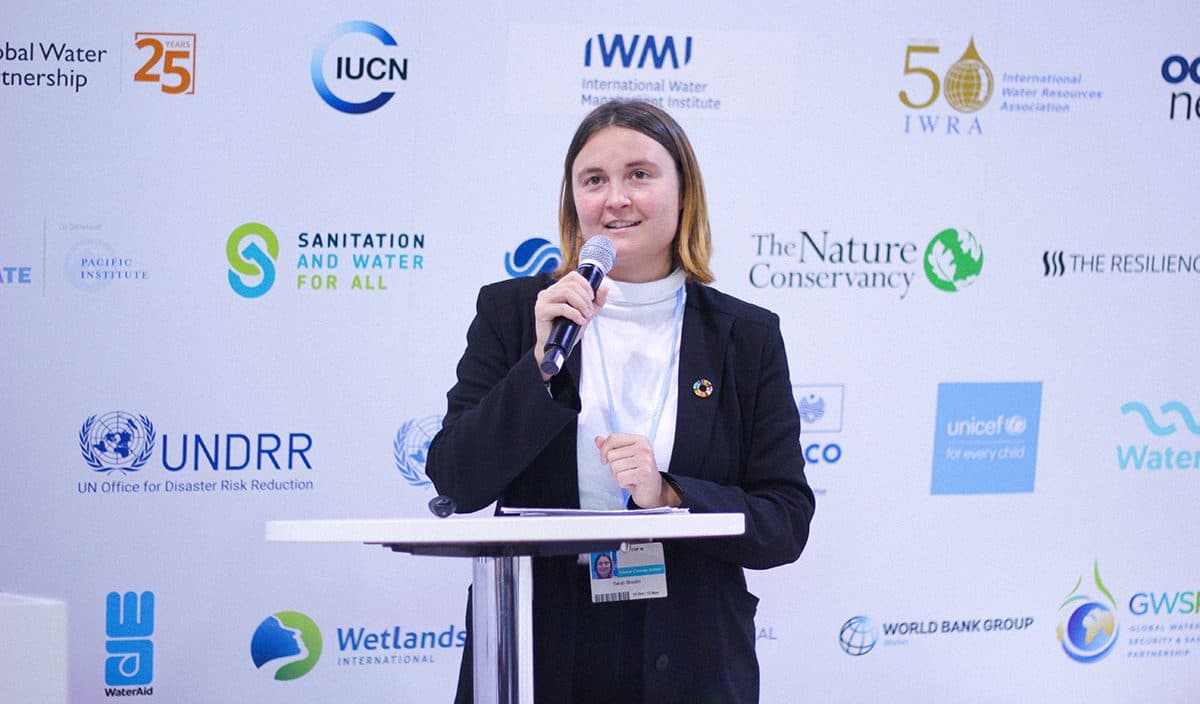
Sarah Breslin, outgoing focal point for gender at SIWI, spoke in the session Reinforcing climate resilience through integrated climate solutions on Wednesday 10 November as part the SIWI-led Water Pavilion’s day on Disaster Risk Reduction:
“Even though climate change adaptation measures are based on hard science, they are not neutral. Because the effects of climate change are not neutral. As was said in the COP26 Presidency event yesterday – climate change is not gender neutral, climate change is sexist,” Breslin said.
She mentioned conservation of nature as one example of how adaptation measures can impact men and women differently. Restoring wetlands is important for carbon storage and as a protection against flooding, “But what if that specific land was the safest route for women in the area to get to fetch water or relieve themselves? Does this mean that they will have to take a longer route, or even worse, an unsafe route, putting them at higher risk of violence?”
To prevent this, Sarah Breslin emphasized the need for decision-makers to speak with all affected stakeholders. Involving women in decision-making is also the key to achieve important transformations, including adapting our agricultural systems where female small-scale farmers play a crucial role. In South Asia, 60 per cent of the women work in agriculture but compared with male farmers they have fewer legal titles to the land they farm and less access to information. “If we want to make these food systems climate resilient, we need to consider the needs, knowledge and capacities of these women,” Breslin emphasized.
You need to accept cookies in order to see the video below. Or watch it on YouTube.