
Stay informed
SIWI newsletter
Receive SIWI’s latest news, events, reports and jobs directly in your inbox.
You can unsubscribe at any time.

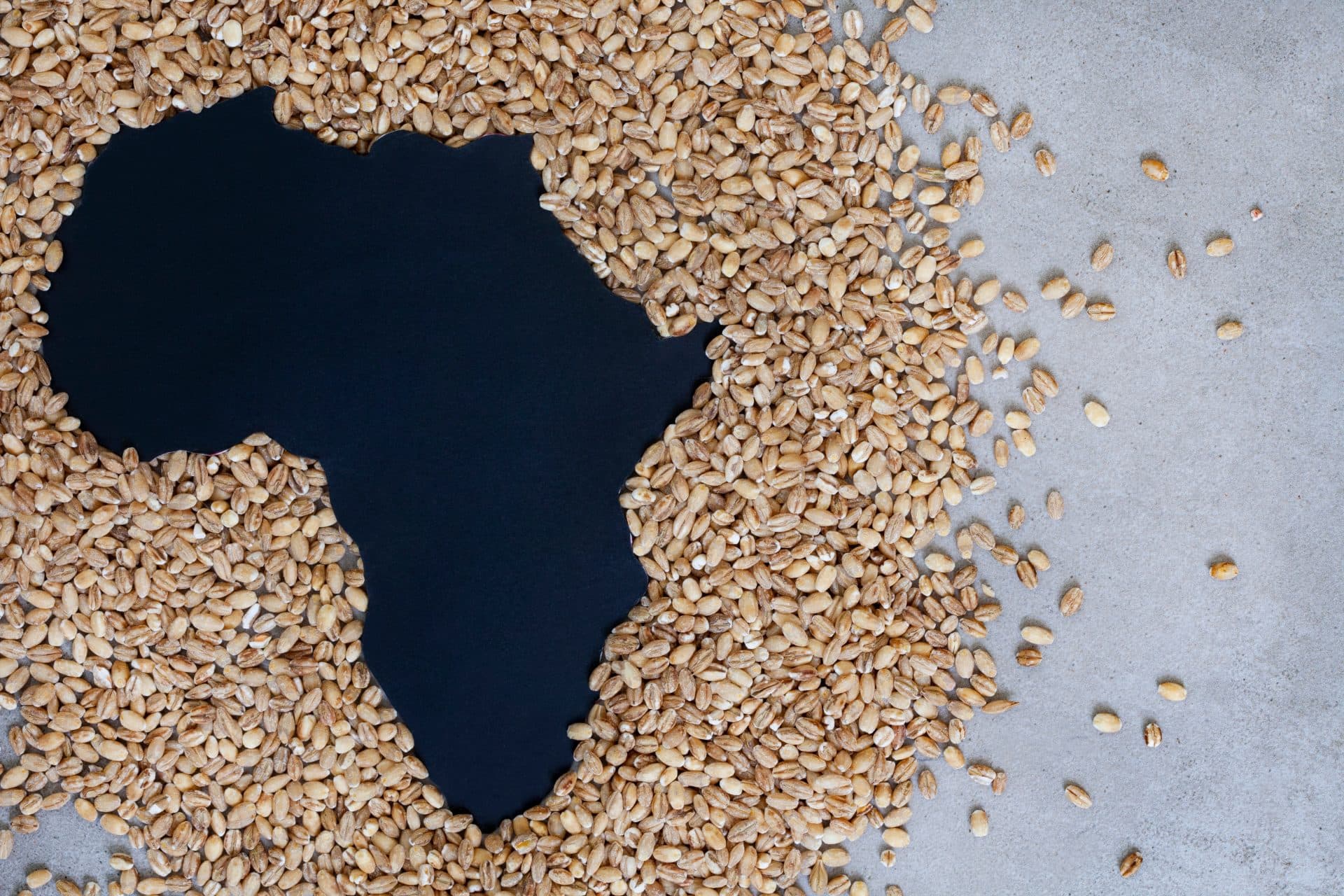
Investing in the right place can help to solve multiple problems across Africa. Currently, a huge challenge is to feed a large and increasing population in the face of climate change, where food production in the continent heavily relies on rainfall. In addition, there is widespread rural poverty. 


Every tonne of food imported into Africa is food that could have been grown in Africa. If, as predicted, Sub Saharan Africa’s increasing food requirements are not met by increasing food imports, a highly unsustainable spiral emerges: foreign expenditure increases and domestic investments in agriculture decrease. This will result in increasing rural poverty, unemployment, insecurity, and economic migration pressures. 
Using global trends in cereal production as an indicator, productivity in Sub-Saharan Africa has followed a markedly different trajectory to other regionsover the last half century. Between the mid 1970s and 2000, per-capita food production in Sub Saharan Africa declined, while other developing economies rapidly boosted production. By 2010 the region had only reached the same per capita production levels as in 1961. As yield increases fail to keep pace with population growth, the result could be growing undernourishment and widespread food insecurity. In the absence of substantial increase in productivity, food imports will become increasingly necessary to ensure an adequate supply of food for the population. 

Virtual jobs refers to the equivalent income and livelihoods that would be earned and enjoyed in SSA if the food imported into the region was cultivated, processed and marketed locally instead of being imported. It represents the on-farm and off-farm opportunity cost to SSA, primarily borne by the rural poor, of importing food from the highly distorted global market. Food imports directly impact the livelihoods of 2.17 million people. 
Most private and public investments in agriculture target commercial irrigated schemes and the “industrialisation” of agriculture. Much of this is directed towards non-food, export-targeted output. Construction of large infrastructure such as dams or pipelines makes “development” visible and attract national aid. But it is important to note that Africa does not have the luxury of perennial water bodies which can feed pipelines to make water available directly to farms and farmers. Instead, 95% of food production relies on rain that falls to the ground. But this sector receives minimal attention or investments.  Five decades of rural development work across the continent has illustrated a need for functional governance and administrative structures at all levels, down to the village and farmstead; transport and marketing infrastructure; finance and credit; training and agricultural extension services; and, critically, water.

The yield per dollar of in-field expenditure is six times larger for improved rainfed agriculture compared to commercial irrigation. 
 This is where small-holder farmers come into the picture. Farmers across Africa rely on rainfall to make a livelihood and secure income for their families. Rainfall is becoming increasingly unreliable. Most of Africa has limited and highly variable natural rainfall. Rainfall variability and evapotranspiration are predicted to increase, while annual average rainfall is likely to decrease as a result of climate change. This leaves much of the farmer population extremely vulnerable. There are critical points in the growth cycle of crops where plants need moisture – brief dry spells in the growing season may result in significantly reduced yields, even when the overall seasonal rainfall may be sufficient. Capturing and maintaining soil moisture to ensure it is available when the plants most need it is key to productive rainfed agriculture.