Stay informed
SIWI newsletter
Receive SIWI’s latest news, events, reports and jobs directly in your inbox.
You can unsubscribe at any time.

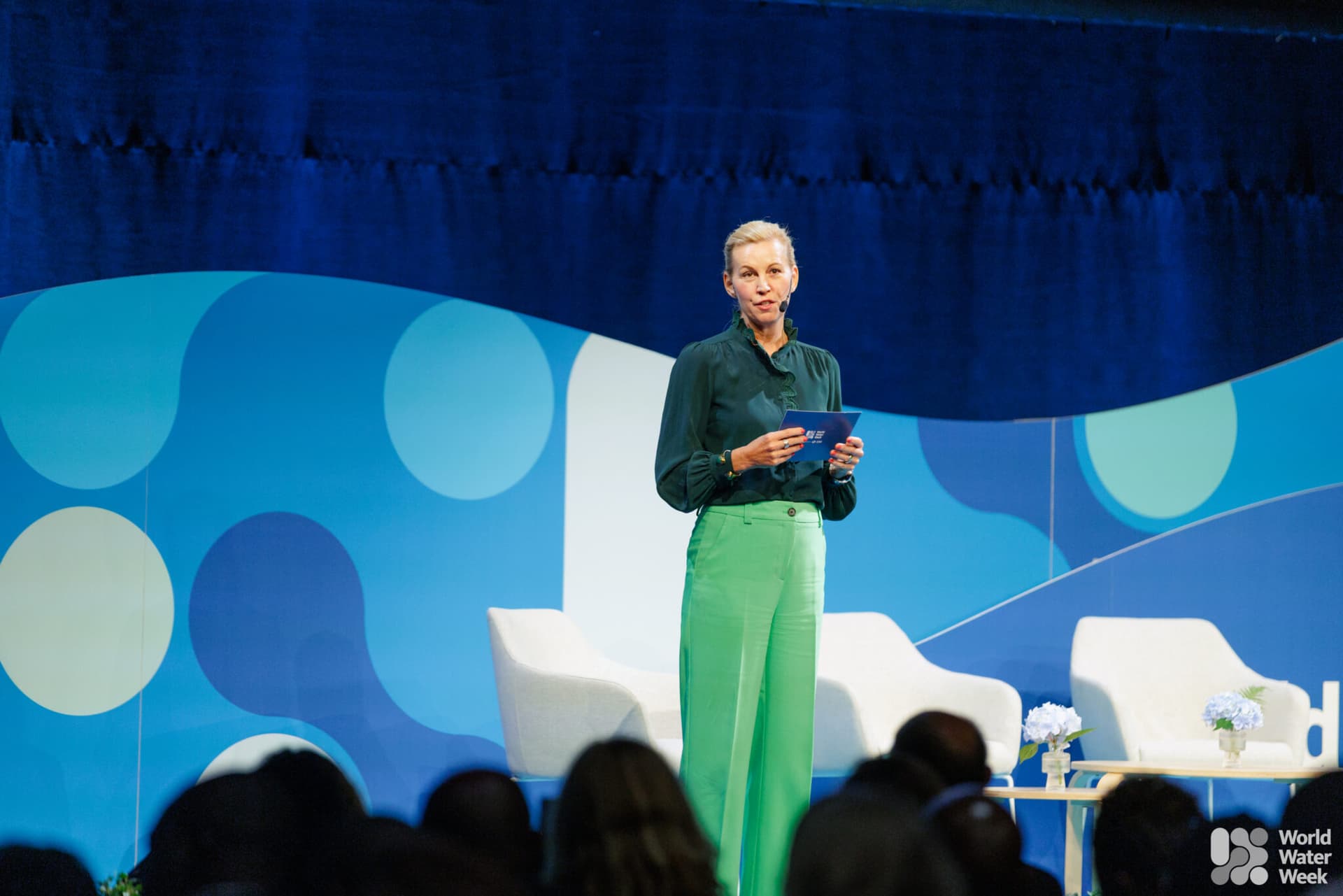

Earlier this year, I joined leaders, partners and water experts in Dakar to discuss the future of global water cooperation. Since then, the conversation has continued across a series of international milestones, including the UN Water Meeting in Rome, the World Water Forum in Istanbul, the Dushanbe Water Conference and the High-level Political Forum. Later this year, it will culminate at the UN 2026 Water Conference in Abu Dhabi.
Although each meeting has its own focus, together they reveal a broader shift. Water is no longer being discussed only as a sectoral issue. It is becoming central to conversations about economic resilience, food security, industrial competitiveness, climate adaptation, public health and peace. Businesses cannot grow without reliable water supplies. Food systems cannot become more resilient without healthy rivers, lakes and groundwater. Climate adaptation depends on understanding and managing the full water cycle. Water has moved higher on the global agenda as leaders increasingly recognize that it cannot be separated from the decisions that shape our economies, our security and our future prosperity.
That is encouraging. But there is an important distinction between recognizing water’s importance and delivering meaningful change. International commitments are essential, but implementation happens in river basins, cities, businesses and communities. It depends on the decisions of policymakers, utilities, investors, researchers, entrepreneurs and local leaders. Turning commitments into practical action remains the defining challenge.
This shift is reflected across this year’s international discussions. The focus is moving from raising awareness to accelerating implementation. The question is no longer only what needs to be done, but how to deliver change at the speed and scale required. The latest UN assessment of Sustainable Development Goal 6 reflects both the progress achieved and the work still ahead. Over the past decade, hundreds of millions more people have gained access to safe drinking water and sanitation, while more countries are strengthening water governance and international cooperation. Yet the report is equally clear that progress remains too slow to achieve the global ambitions set for 2030.
A more sobering perspective comes from the United Nations University Institute for Water, Environment and Health. In the 2026 Global Water Bankruptcy report, led by Professor Kaveh Madani, the authors argue that the language of “water crisis” is no longer sufficient in many places. They point to long-term overuse and degradation of rivers, lakes, aquifers, wetlands, soils and glaciers, warning that some water systems have been damaged beyond realistic prospects of full recovery. Nearly three-quarters of the world’s population now lives in countries classified as water-insecure or critically water-insecure, while around 70 percent of global freshwater withdrawals continue to be used for agriculture.
Taken together, these reports tell an important story. Progress is possible, but the challenge is becoming more systemic. The defining question for 2026 is whether we can implement the solutions we already know at the speed and scale the moment demands.
No single government, company or organization can deliver that change alone. Turning global ambition into practical action requires collaboration across sectors, disciplines and levels of decision-making.
For more than three decades, SIWI has convened World Water Week on the belief that better water governance begins by bringing together people who would not otherwise meet. As water has become central to more global challenges, that role has become more important than ever.
Many international meetings focus primarily on policy or technical discussions. World Water Week is different because it deliberately connects the people who shape global ambition with those who deliver change on the ground. Policymakers engage with business leaders, scientists with investors, and city leaders with development practitioners, while Indigenous Peoples, journalists, young professionals and civil society organizations contribute perspectives that broaden the conversation and challenge established thinking. At SIWI, we believe that better decisions begin with better conversations. Convening is not simply about bringing people into the same room. It is about ensuring that global priorities are informed by practical experience—and that local innovation helps shape international discussions. That thinking is reflected in this year’s theme, Water for People and Progress. Progress depends on connecting evidence with policy, innovation with investment, and global priorities with local realities. World Water Week provides a space to build those connections, share successful approaches and explore difficult trade-offs openly.
“Global ambition only matters if it reaches the people and places where change happens.”
No single conference will solve the world’s water challenges. Nor should it try. The value of World Water Week lies in what happens afterwards: the partnerships it strengthens, the ideas it advances and the actions it helps inspire.
Positioned between many of this year’s major international milestones, the Week provides an opportunity to reflect on progress, learn from implementation and strengthen collaboration before attention turns to the UN 2026 Water Conference. It connects the global conversation with the realities of delivery, helping ensure that commitments are informed by experience and grounded in evidence.
If 2026 is remembered as a year when water moved closer to the centre of global decision-making, it will not be because of any single meeting. It will be because governments, businesses, researchers and communities found new ways to work together to turn ambition into action. World Water Week helps create those connections, bringing together the people, evidence and partnerships needed to move global ambition one step closer to real-world progress.