Stay informed
SIWI newsletter
Receive SIWI’s latest news, events, reports and jobs directly in your inbox.
You can unsubscribe at any time.

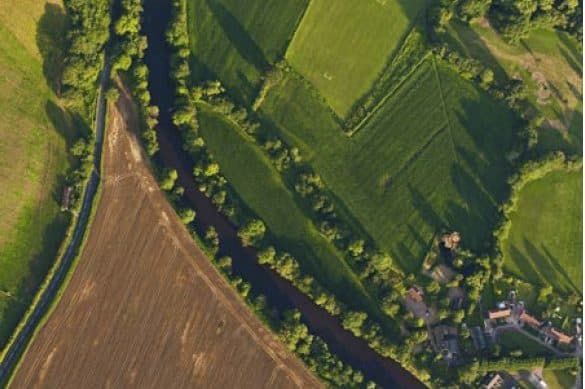
Trees, forests and agriculture are key to reducing carbon emissions and assisting countries in adapting to the adverse effects of climate change. In addition, sustainable forest and land management provide essential ecosystem services that regulate both surface and groundwater flows. To achieve the Paris Agreement and meet major water challenges, water wise management and productive multi-functional landscapes are crucial.
SIWI welcomes the initiative launched at COP23 by the Subsidiary Body for Implementation (SBI) and the Subsidiary Body for Scientific and Technological Advice (SBSTA), to recall Articles 9 and 10 of the Convention and, in accordance with decision 4/CP.23, initiate the Koronivia joint work on agriculture (KJWA). The KJWA takes into consideration the vulnerabilities of agriculture to climate change and the impacts on food security in the context of improved soil carbon, soil health and soil fertility under grassland and cropland as well as integrated systems, including water management.
Improved integration of land and water considerations and understanding of hydrological processes in landscapes can contribute to both climate change mitigation, through reduction of emissions from land use and land use change, and to adaptation by supporting essential ecosystem services that regulate both surface and groundwater flows. However, landscape management is complex, as it encompasses multiple objectives, stakeholders and governance levels. It is context-specific and it is therefore impossible, even undesirable, to present a unique blueprint for water management in the landscape. We recommend combining the different aspects of management of water in the landscape in a flexible, adaptive and integrated manner.

Explainers and briefs·Sep 14, 2026

Explainers and briefs·Jul 16, 2026

Explainers and briefs·Jun 27, 2026
Explainers and briefs·Jun 17, 2026