Stay informed
SIWI newsletter
Receive SIWI’s latest news, events, reports and jobs directly in your inbox.
You can unsubscribe at any time.

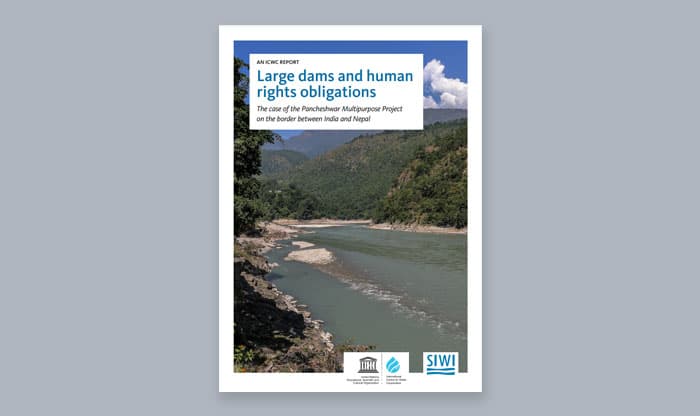
Building on the human rights-based approach (HRBA), as proposed two decades ago by the World Commission on Dams, the report analyses the transboundary Pancheshwar Multipurpose Project, on the Mahakali-Sharda River between India and Nepal.
HRBA, it is argued, can be a helpful tool when assessing large dam projects, as it provides a step-by-step method to identify rightful claims, freedoms, and entitlements. It is a value-based, people-centered way to foresee and prevent conflict by ensuring due participation and transparency in decision-making processes.
History shows us that poor or ignorant planning may lead to human rights abuses on a large scale, most commonly in the form of population displacement and the loss of livelihood and cultural heritage. There is however a different route to take, according to the report. It means that respect for human rights does not necessarily rule out large infrastructure development projects, but it will impose conditions and procedural limits on them, to the benefit of all parties.
The Mahakali–Sharda River forms part of the international border between India and Nepal. This report analyses the planned Pancheshwar Multipurpose Project, a transboundary hydropower scheme. The development of clean and renewable energy is indispensable to meet the increasing demand for electricity while limiting the impact of climate change. The planning and construction of large dams have always stirred up feelings. There are, inevitably, trade-offs between the benefits they aim to bring and the negative impacts they are likely to cause.
Some 60,000 people risk forced eviction in this case. The report, published by the International Centre for Water Cooperation at SIWI, provides recommendations on appropriate steps and mitigation measures by applying the human rights-based approach (HRBA). The human rights at stake do not prevent large infrastructure development projects from taking place, but impose conditions and procedural limits on them.