Stay informed
SIWI newsletter
Receive SIWI’s latest news, events, reports and jobs directly in your inbox.
You can unsubscribe at any time.

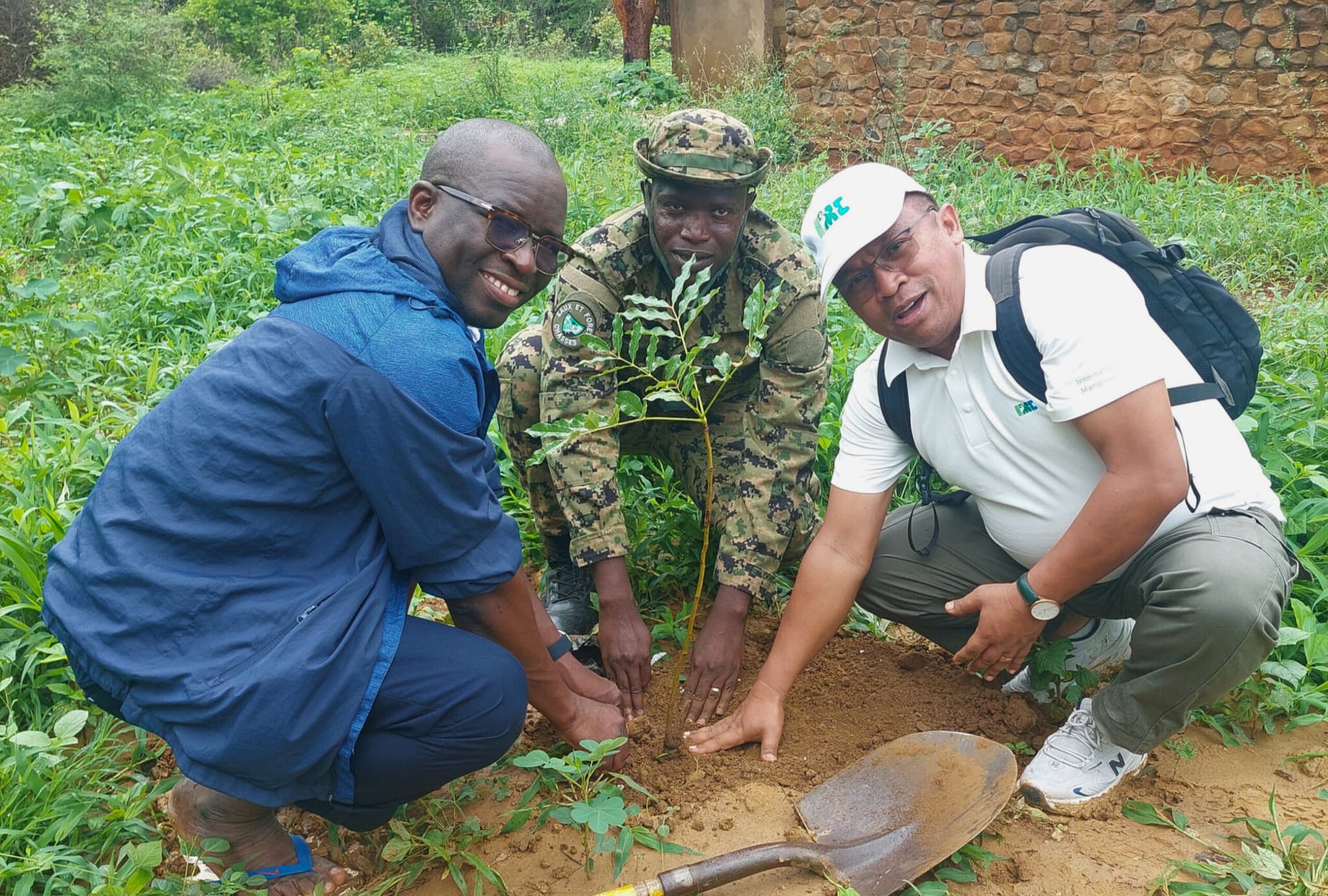
Global efforts to restore degraded landscapes are accelerating. Governments, businesses and development organizations are investing heavily in forest and landscape restoration to achieve climate, biodiversity and development goals.
Yet discussions about restoration often focus on visible outcomes such as tree cover, timber production and carbon sequestration. Much less attention is paid to one of the most important benefits that forests provide: water.
Through the LoCoFoRest programme led by the Swedish Forest Agency, with SIWI and Eco-Innovation Foundation as partners, SIWI has worked with practitioners, government agencies, researchers and entrepreneurs across Africa and Asia to strengthen local capacity for forest and landscape restoration. The programme’s experience highlights a recurring lesson: successful restoration depends not only on trees, but on restoring ecosystem services, including the water cycle, and linking those restoration efforts to local value chains and market systems.
What is the most valuable product a forest produces?
Timber, fuelwood and, increasingly, carbon are the forest products that receive most attention because they are visible, measurable and can be traded.
But properly restored forests also produce something far less visible, yet equally essential: they regulate water quantity and quality. They influence how rainfall is absorbed, stored and released across landscapes. They shape soil moisture, sustain streams and recharge groundwater. Without these functions, both ecosystems and economies struggle to endure.
Recognizing water as a core “product” of forests challenges conventional assumptions about restoration. It shifts the focus from planting trees to restoring functioning landscapes.
Forests play a central role in the hydrological cycle, particularly through what is often referred to as “green water” — the water stored in soil and vegetation that supports plant growth and evapotranspiration.
Through their roots, canopy and interaction with soils, forests help regulate how water moves through landscapes. They reduce runoff and erosion, enhance infiltration and groundwater recharge, and contribute to local and regional rainfall patterns.
These processes are critical for agriculture, especially in rainfed systems, where reliable soil moisture can determine crop success or failure. They also reduce climate risks by buffering against floods and droughts.
In simple terms, healthy forests help landscapes hold and use water more effectively. This function is fundamental, yet it is rarely central in restoration planning.
Experiences from the LoCoFoRest programme in 9 different countries in Africa and Asia highlight how restoration is evolving in practice.
Farmers and local stakeholders often favour diversified agroforestry systems over monoculture plantations. These systems combine trees with crops and sometimes livestock, providing multiple benefits: improved soil fertility, better water retention, diversified income streams from diverse forest products and services, and increased resilience to climate variability.
The programme also highlights a broader shift in how restoration is understood. Rather than focusing primarily on timber production, many local stakeholders are interested in how landscapes can sustain productivity over time, reduce risks and support livelihoods. Across the programme, water availability and soil health repeatedly emerged as priorities for farmers and land managers.
These experiences reinforce an important point: successful restoration is not simply about increasing tree cover. It is about restoring landscapes that continue to provide multiple ecosystem services over the long term.
Despite its importance, water regulation remains largely invisible in markets and financing mechanisms.
Carbon has become a measurable and tradable asset, supported by methodologies, standards and financial incentives. Water-related ecosystem services, by contrast, are harder to quantify, less visible and often taken for granted. This creates a mismatch: restoration efforts are frequently designed around what can be easily measured and financed, rather than what is most critical for long-term sustainability.
However, this is beginning to change. Emerging approaches — such as payments for ecosystem services, watershed-based financing and landscape-level investment models — offer opportunities to better recognize and reward the role of forests in water regulation.
Unlocking these opportunities will require new metrics, stronger governance frameworks and closer collaboration between sectors – all key components of LoCoFoRest.
As restoration efforts continue to scale globally, there is a growing need to broaden the conversation. Restoring tree cover alone is not enough. The next generation of restoration initiatives must focus on restoring the hydrological functions that underpin ecosystems, agriculture and livelihoods.
Forests should be recognized not only as carbon sinks or sources of timber, but as critical infrastructure that offer multiple services: helps regulate water, strengthen resilience and support sustainable development. The multiple services should be able to bundle multiple sources of finances.
This perspective closely aligns with SIWI’s work on green water, the hydrological cycle and water governance.
The experiences from LoCoFoRest reinforce the need to view forest and landscape restoration not only as a solution for forestry challenges, but equally as a solution for water challenges.
Doing so strengthens the case for integrated approaches that link ecosystems, economies and governance systems — and reinforces the role of water as a foundation for sustainable development.