









Stay informed
SIWI newsletter
Receive SIWI’s latest news, events, reports and jobs directly in your inbox.
You can unsubscribe at any time.


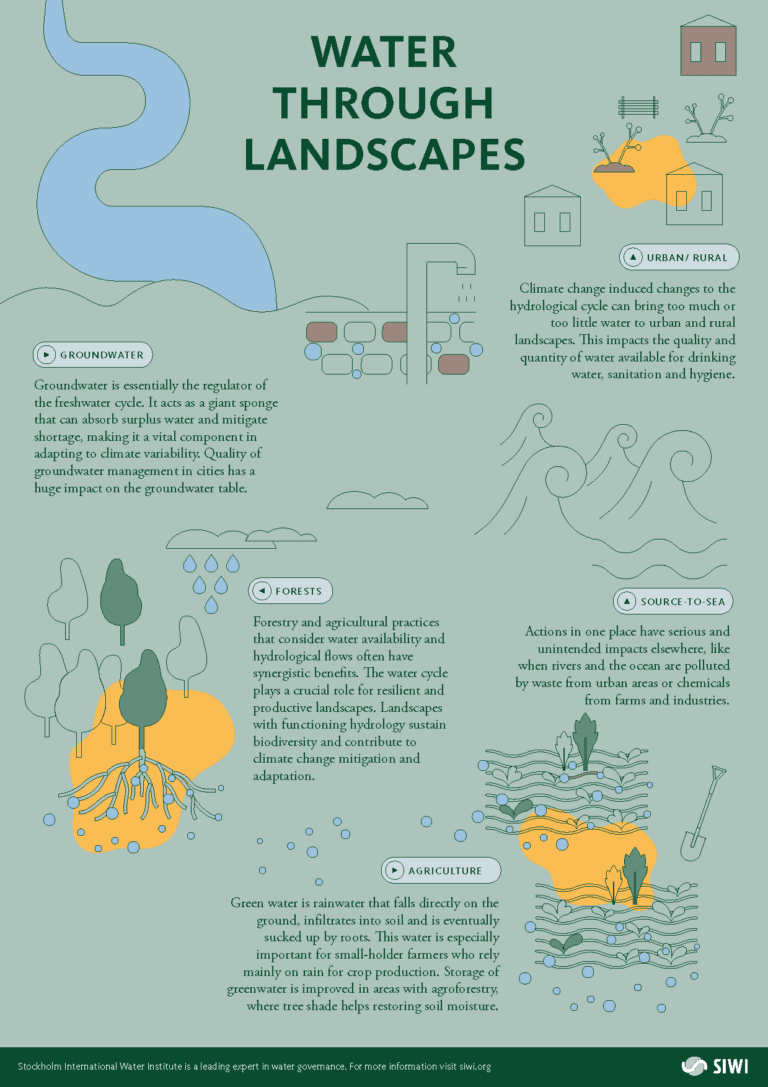
Yet green water is rarely governed explicitly. Deforestation, land degradation, unsustainable farming practices, and climate change are disrupting evaporation, transpiration and precipitation patterns across regions. Decisions about forests, land use, and agriculture are often made separately from water policy, despite their direct influence on rainfall and soil moisture. Without stronger coordination, green water flows can be altered in ways that increase continental drying, drought risk, reduce crop yields, and weaken ecosystem resilience.
SIWI works to strengthen governance of green water by connecting land, water, and climate policy. We support approaches that recognize the role of forests, landscapes, and soil moisture in regulating rainfall and sustaining water systems. Through dialogue, knowledge exchange, and policy engagement, SIWI helps integrate green water considerations into climate adaptation and mitigation, land-use planning, and water governance frameworks.
By bringing green water into decision-making, SIWI helps support more resilient food systems, healthier ecosystems, and more stable rainfall patterns. Recognizing and governing green water strengthens climate resilience and ensures that land and water management work together to sustain people and nature.