Stay informed
SIWI newsletter
Receive SIWI’s latest news, events, reports and jobs directly in your inbox.
You can unsubscribe at any time.

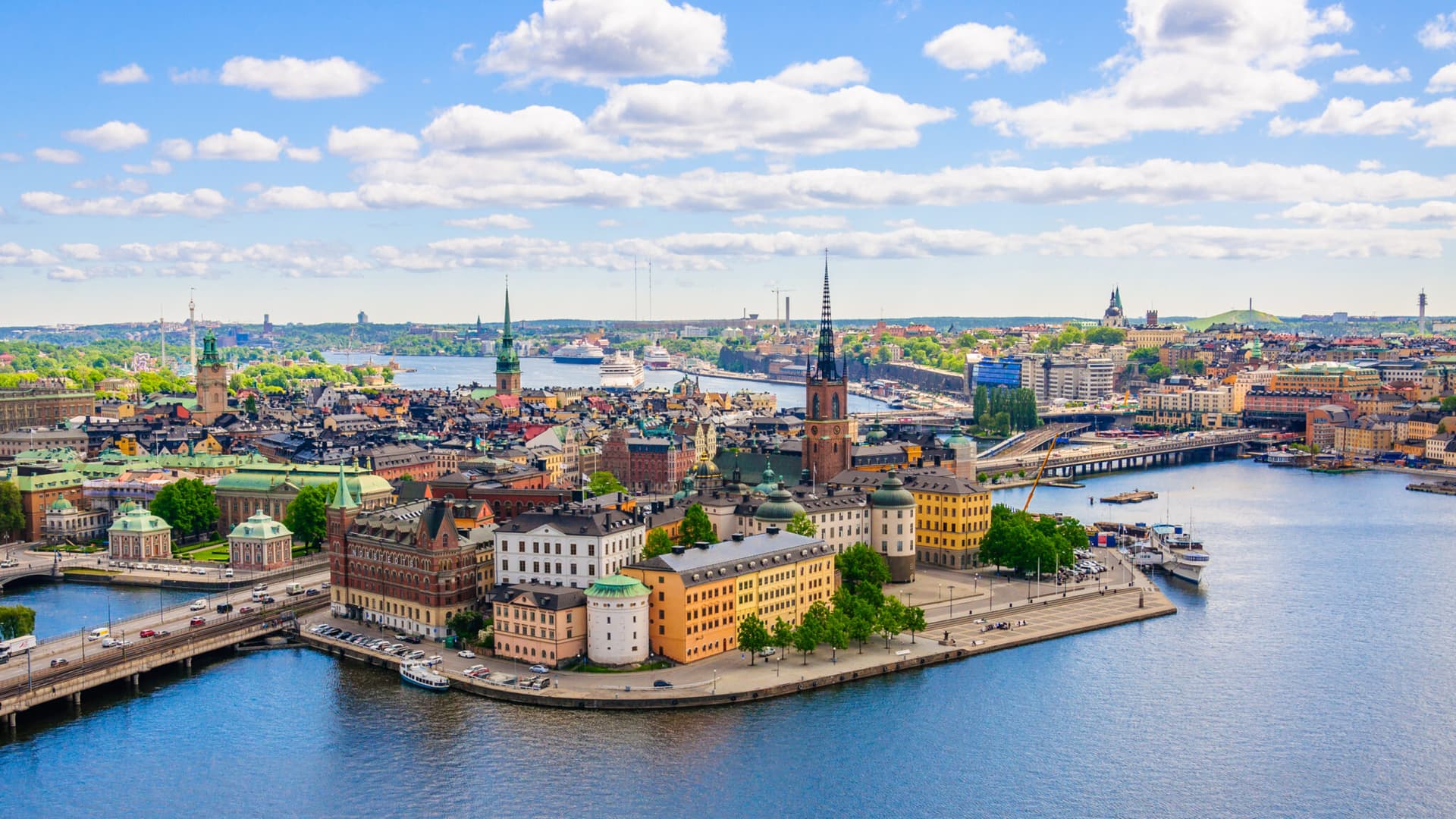

The report, Turning water risk into competitive advantage, captures key insights from a recent seminar convened by Swedish Water House, a part of SIWI, together with UN Global Compact Network Sweden and Skandia in Stockholm ahead of World Water Day. Bringing together actors from finance, industry, research, entrepreneurship, and civil society, the discussion explored how water is reshaping economic systems—and what it will take to translate growing awareness into action.
Climate change, water scarcity, flooding, and ecosystem degradation are already disrupting production, supply chains, and financial performance. Yet water remains undervalued and insufficiently integrated into core business and investment strategies.
Across sectors, a shared understanding is emerging—water is no longer only a sustainability issue, but a material business and investment risk. Participants pointed to four core dimensions shaping this risk: too much water, too little water, polluted water, and ageing infrastructure.
A central tension highlighted in the discussion is the gap between available capital and investable water solutions. While private finance is seen as essential, investment is often constrained by limited data, lack of standardized approaches, and unclear revenue models.
Water’s local and context-specific nature further complicates efforts to scale solutions, creating a disconnect between global capital and local realities.
Unlocking investment depends on demonstrating clear value. However, many benefits of water-related investments—such as resilience or reduced risk—are difficult to quantify in financial terms.
This creates a structural gap between what is valuable and what is investable.
While solutions exist, many remain at pilot stage. Progress is often slowed not by technology, but by fragmented governance, low water pricing, and misaligned incentives.
Scaling will depend less on new innovations and more on aligning responsibilities, financing models, and institutional frameworks.
The report concludes with a clear message: the constraints are no longer primarily technical or financial. Solutions exist, capital is available, and awareness is increasing.
The remaining challenge lies in aligning incentives, governance, and decision-making to enable action at scale—as water moves firmly to the centre of economic and financial systems.