








Stay informed
SIWI newsletter
Receive SIWI’s latest news, events, reports and jobs directly in your inbox.
You can unsubscribe at any time.

As global attention converges on water in 2026, the question is no longer whether water matters—but how it is governed.
From the Dushanbe Water Process in May, through World Water Week in August, to COP31 in November and the UN 2026 Water Conference in December, water is rising across climate, biodiversity, development and finance agendas. But while attention and commitments are growing, governance approaches are not keeping pace.
SIWI’s recent policy brief, Governing Water as a System, highlights a widening gap between ambition and implementation. Water is not a sector—yet it continues to be treated as one. Decisions remain fragmented across climate, land, ecosystems and economic systems, even as water connects them all.
To explore how this gap is playing out in practice, SIWI is bringing together a small group of leading voices from across the water community to share short insights on the signals shaping the global agenda in 2026.
Professor Johan Rockström, Director of the Potsdam Institute for Climate Impact Research

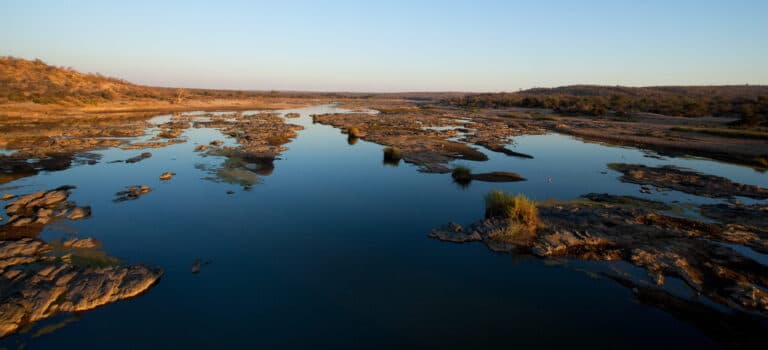
Rockström points to a fundamental shift in how water is understood. Rather than focusing only on rivers and groundwater, attention is moving towards the full hydrological cycle—including green water, the moisture in soils, vegetation, and the atmosphere that drives rainfall and sustains ecosystems. This reflects a broader systems perspective, where water is central to how climate and ecosystems function.
Meike van Ginneken, Water Envoy for the Kingdom of the Netherlands

Van Ginneken highlights how water risks are becoming economic risks. From supply chains to cities, water-related challenges are increasingly shaping financial decision-making—yet governance and investment approaches often lag behind.
Bapon Shm Fakhruddin, Water and Climate Leader, Green Climate Fund

Fakhruddin focuses on the growing need for integrated risk management. Floods, droughts, and climate variability are interconnected, requiring governance that can respond across sectors and scales.
Jessika Roswall, European Commissioner for Environment, Water Resilience and a Competitive Circular Economy

Jessika highlights a critical shift: water security is becoming inseparable from economic security, food security, energy security, and environmental security.
Anders Jagerskog, PhD, Program Manager, Cooperation in International Waters in Africa (CIWA) Trust Fund

New financing models are helping secure the future of shared river basins. Anders Jagerskog explores why sustainable funding and stronger links to economic development are becoming priorities in transboundary water cooperation.
Alvaro Lario, President, International Fund for Agricultural Development, UN-Water Chair

Lario highlights how the global water agenda is increasingly shaped by water’s role as a connector. Rather than addressing sustainable development challenges in silos, he argues that water must be integrated across sectors to accelerate implementation. This reflects a growing recognition that water underpins resilience, sustainable development, and long-term prosperity.
Taken together, these reflections reinforce a broader shift. If the past decade has been about recognizing water’s importance, the current moment is about governing it differently.
This has practical implications. Governance must reflect the full hydrological cycle, including green water. Climate policy and finance need to be grounded in water realities. And global processes—from climate to biodiversity to development—must become more aligned in how they address water.
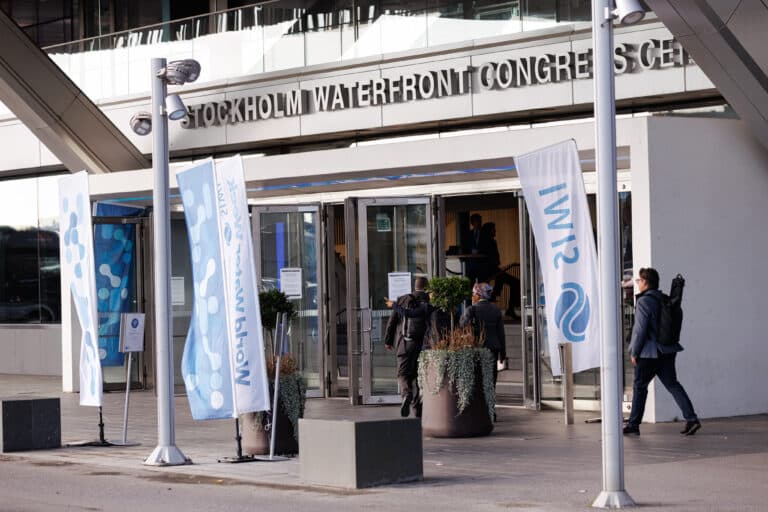
Platforms like World Water Week play a critical role in this context. As a convening space ahead of COP31 and the UN 2026 Water Conference, it provides an opportunity to connect high-level ambition with practical pathways for implementation.