

Receive SIWI’s latest news, events, reports and jobs directly in your inbox.
You can unsubscribe at any time.
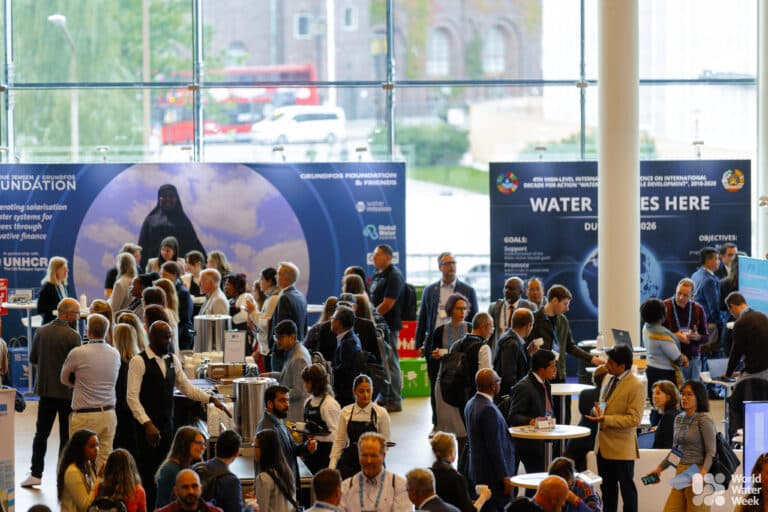
World Water Week in Stockholm is an annual, non-profit event organized by SIWI, convening decision-makers…
Each year, World Water Week brings together actors who rarely meet elsewhere: governments, companies…
Over 35 years, World Water Week has evolved from a small scientific gathering into a global meeting place, reflecting changing …
Swedish Water House works by creating spaces where Swedish actors can meet, exchange perspectives, and engage …
Events and seminars are a core way in which Swedish Water House connects Swedish actors to global water issues.

The six Interactive Dialogues will structure the main thematic discussions at the 2026 UN Water Conference, taking place in Abu Dhabi from 8 to 10 December. Their purpose is to focus the conference on solutions and actions that can accelerate progress towards Sustainable Development Goal 6 on water and sanitation.
Each Dialogue is co chaired by two countries and supported by convenors developing concept papers, priority actions and proposed flagship initiatives. These processes are intended to turn the conference’s broad ambitions into more focused areas for discussion, cooperation and implementation.
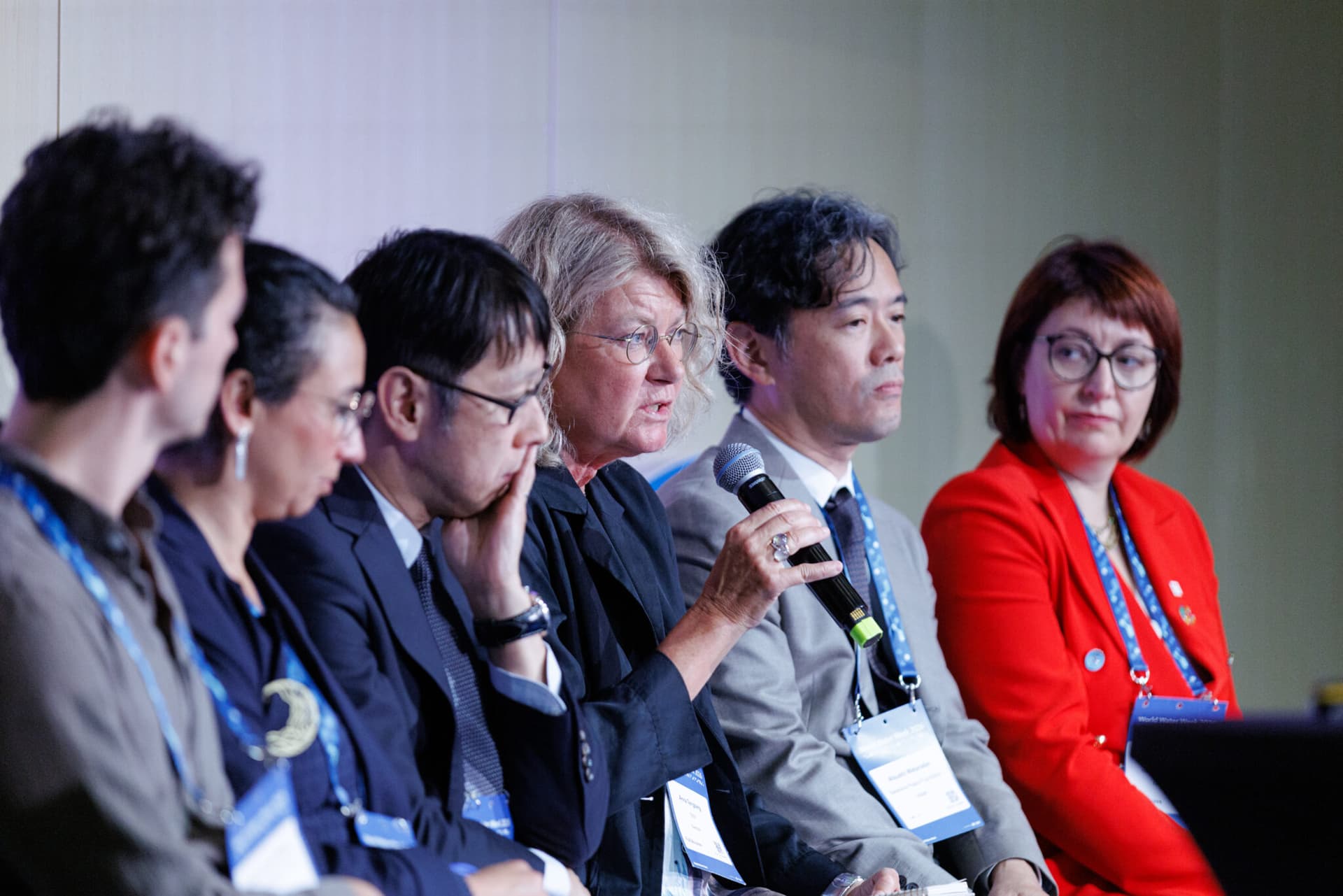
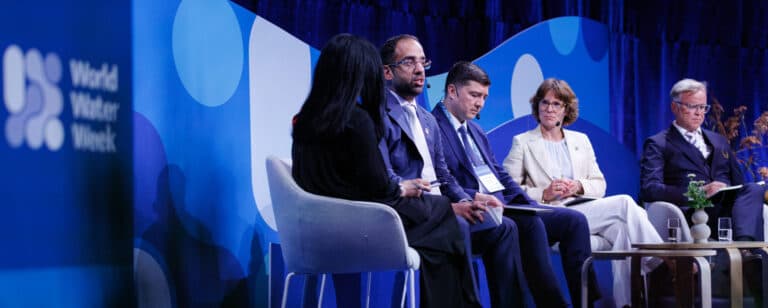
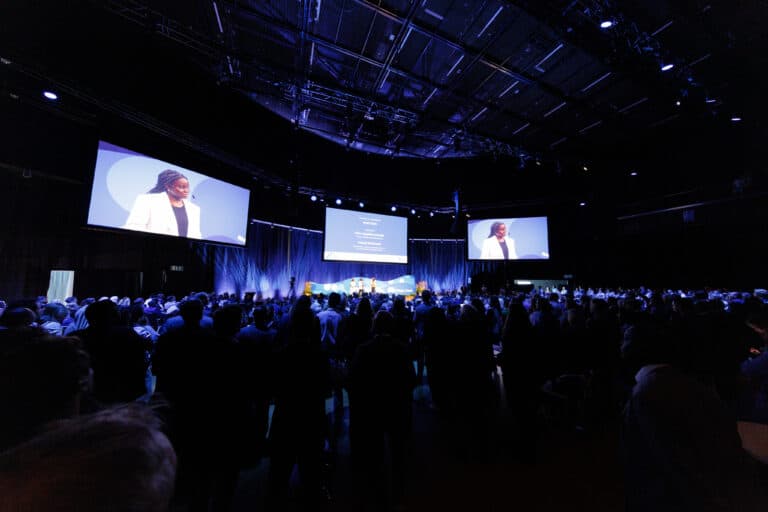
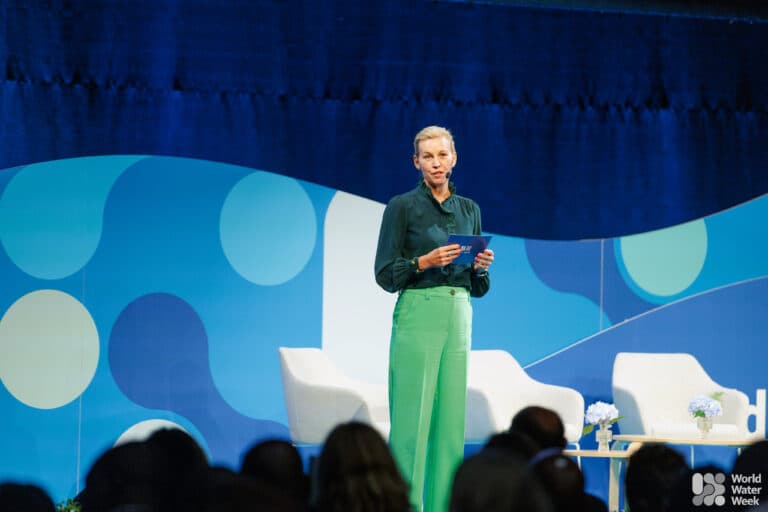
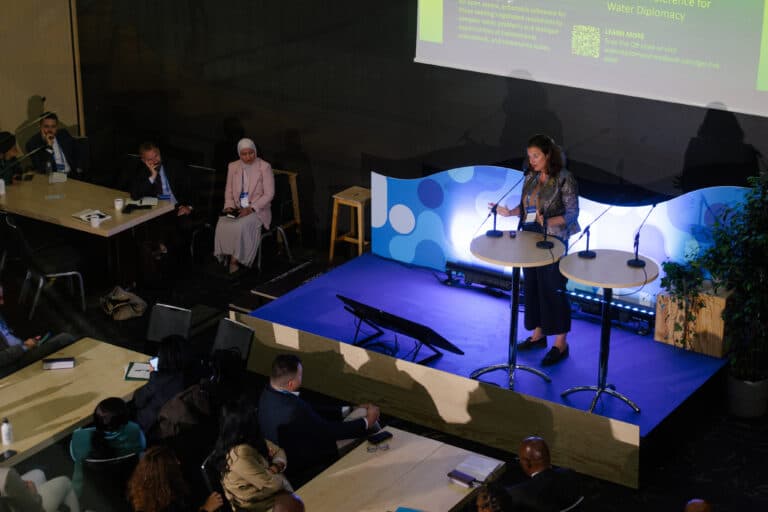
At World Water Week, four of the Dialogues opened their work to wider consultation. The sessions presented work in progress and invited participants to test proposals, identify gaps and contribute further ideas. They allowed the co chairs and convenors to draw on the experience of policymakers, practitioners, researchers, civil society and other stakeholders before finalizing their proposals.
Ghana and Switzerland, co chairs of Interactive Dialogue A on Water for People, focused attention on the human rights to water and sanitation.
Participants examined how political leadership, equity and climate resilience could be translated into stronger water, sanitation and hygiene systems. Six working groups are developing proposals covering human rights based approaches, climate resilient services, humanitarian and conflict settings, data and accountability, financing, and decentralized capacity.
The discussion highlighted a persistent gap between ambition and delivery. Financing proposals included mechanisms to reduce the risks associated with water and sanitation lending, more targeted subsidies and insurance against water related shocks. Participants also stressed that such ideas need clear leadership, identified sources of finance and the capacity to implement them locally.
The inputs from Stockholm will help the working groups refine their proposed initiatives and actions before submitting them to the co chairs.
Egypt and Japan, co chairs of Interactive Dialogue C on Water for Planet, addressed a particularly broad challenge: how to connect water more effectively with action on climate, biodiversity, land, ecosystems and disaster risk.
The session linked the 2023, 2026 and 2028 UN Water Conferences as stages in a continuous process, moving from commitments to implementation and measurable results. Participants called for the full hydrological cycle to be considered, rather than separating upstream from downstream, surface water from groundwater, or water policy from climate and ecosystem policy.
Proposals included treating freshwater ecosystems as natural infrastructure, strengthening water monitoring and early warning systems, restoring ecosystems and connecting water more systematically with the Rio Conventions on climate, biodiversity and desertification. Several potential flagship initiatives are now being developed for Abu Dhabi.
Participants also stressed the need to carry water into other international processes during 2026, including COP31, and to strengthen connections between the different Interactive Dialogues. This would help avoid treating water, climate, ecosystems and disaster risk as separate policy challenges.
Interactive Dialogue D on Water for Cooperation, co chaired by Finland and Zambia, explored how cooperation can continue when waters are shared across borders and political interests diverge.
The consultation concentrated on four connected areas: inclusion, conflict sensitivity, scientific cooperation and the relationship between science and policy. Participants emphasized that cooperation does not require the absence of disagreement. It requires institutions capable of managing disagreement transparently and over time.
Joint monitoring, shared data and collaborative research can help countries develop a common understanding of water conditions and risks. But the discussions also showed that evidence alone is insufficient. Communities, Indigenous Peoples, women and other affected groups need genuine opportunities to influence priorities and decisions.
Institutions can serve as “trust infrastructure” when they are inclusive, reliable and able to deliver tangible benefits. Participants therefore framed water cooperation as an ongoing process of building relationships, knowledge and shared interests, rather than a fixed outcome.
Germany and Mexico, co chairs of Interactive Dialogue E on Water in Multilateral Processes, asked a fundamental question: how can the multilateral system work better for water?
Participants considered a series of possible building blocks, including regular UN Water Conferences, stronger coordination across the UN system, closer links between water and other multilateral processes, and more continuous stakeholder participation. The aim is not to create another institutional silo, but to build a stronger “roof” connecting existing work on implementation, finance and governance.
The proposals remained deliberately open. Stockholm provided an opportunity to test their level of support, identify missing elements and inform both the Dialogue’s concept paper and a forthcoming state of play report.
Across the four consultations, several common priorities emerged. Participants wanted clearer routes from recommendations to implementation, stronger links between global processes and national action, and participation that continues beyond individual conferences.
The work now returns to the co chairs, convenors and working groups. Their task is to turn the ideas tested in Stockholm into focused proposals for Abu Dhabi and ensure that the 2026 UN Water Conference contributes to a longer process of implementation and accountability rather than becoming an isolated moment.
Receive SIWI’s latest news, events, reports and jobs directly in your inbox.
You can unsubscribe at any time.