








Stay informed
SIWI newsletter
Receive SIWI’s latest news, events, reports and jobs directly in your inbox.
You can unsubscribe at any time.

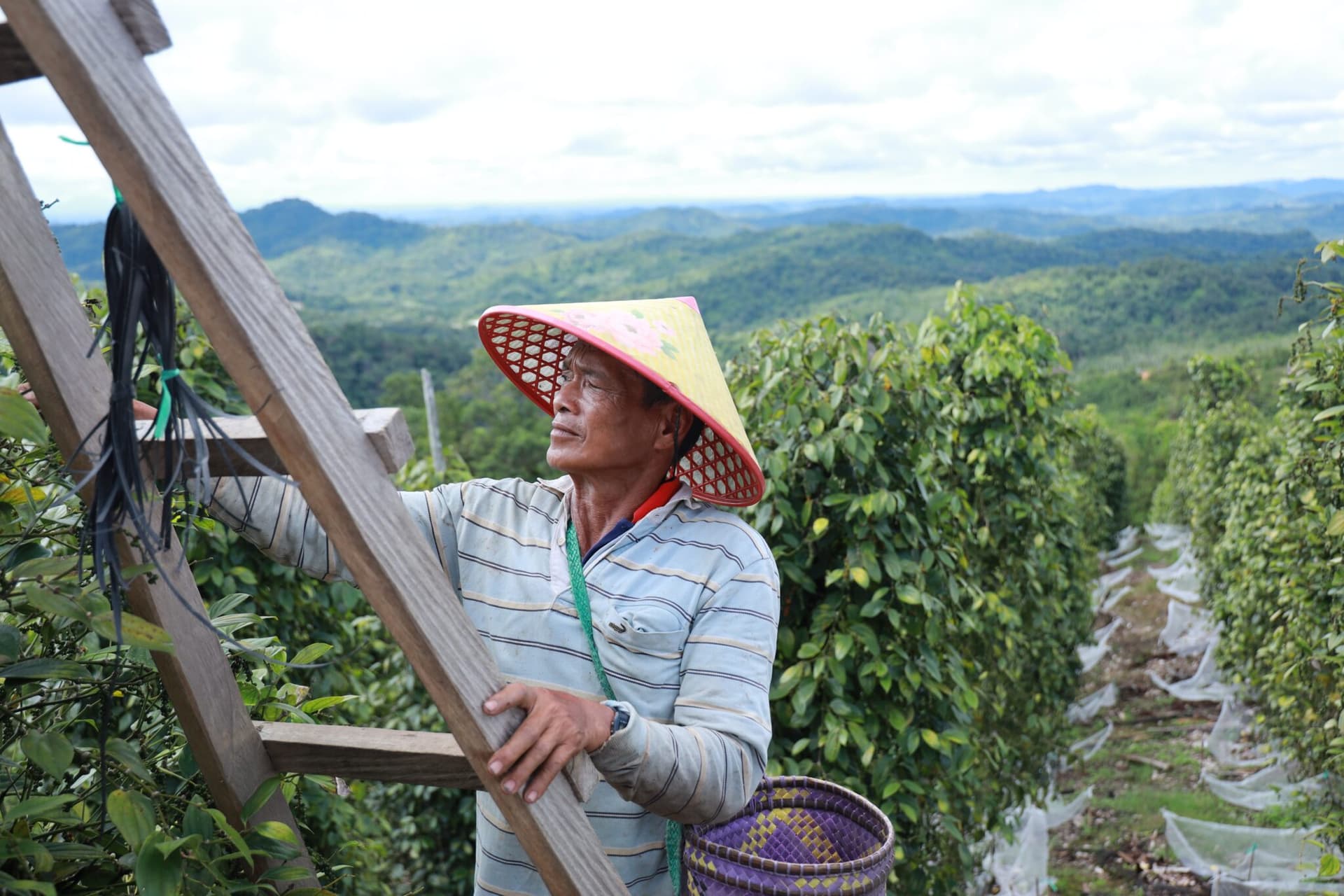

Water is increasingly recognized as a critical factor in climate resilience, economic stability, and sustainable development. Yet investment in the sector continues to fall far short of what is needed. At London Climate Action Week 2026, SIWI joined policymakers, investors, development banks, and water experts to explore why financing remains a challenge—and what emerged from the discussion about unlocking investment at the scale required for a more water-resilient future.
If water is essential to economic development, food production, energy systems, public health, and climate resilience, why does investment in the sector continue to lag behind need?
That question was at the heart of discussions during Bridging the Gap: Financing Global Water Resilience, a roundtable convened by the Council on Energy, Environment and Water (CEEW) and co-organized by partners including AIIB, SIWI, IWMI, Global Water Intelligence, WRG2030 Scaling Water Reuse Initiative, and Intellecap. Held during London Climate Action Week 2026, the session brought together policymakers, development banks, investors, and water experts to explore one of the most persistent challenges facing the water sector: how to unlock investment at the scale required to build resilience in a changing climate.
SIWI’s Thomas Rebermark, Director Swedish Water House/Strategic Partnership Development, contributed to the discussion as one of the invited speakers, bringing perspectives from SIWI’s work at the intersection of water governance, climate policy, and finance.
Global estimates suggest that achieving Sustainable Development Goal 6 will require hundreds of billions of dollars in additional annual investment. Yet despite growing recognition of water’s importance, investment has not kept pace.
Participants agreed that the challenge is not simply a lack of capital.
As SIWI’s Thomas Rebermark noted during the discussion, “Capital exists. Water needs exist. The challenge is connecting the two at scale.”
Around the world, governments, financial institutions, and businesses increasingly recognize that water-related risks affect food systems, energy production, urban development, public health, and economic stability. Water is no longer viewed solely as an environmental or development issue. It is increasingly understood as a resilience issue.
Yet translating that recognition into investment remains difficult.
One of the strongest themes to emerge from the discussion was the growing disconnect between political recognition of water and the financial flows needed to address water-related risks.
In recent years, water has become increasingly embedded within global climate processes. COP28’s UAE Framework for Global Climate Resilience included a dedicated target on climate-resilient water supply and sanitation. At COP29, 73 countries signed the Baku Declaration on Water for Climate Action. At COP30, water and sanitation were incorporated into the newly adopted adaptation indicator framework.
Despite this progress, investment has struggled to keep pace. Less than 3 percent of tracked global climate finance currently reaches water-related projects.
“The frameworks have moved. The capital has not,” said Rebermark.
For participants, this gap highlighted one of the central challenges facing the sector: translating political commitments and climate ambitions into investable opportunities.
One recurring theme throughout the discussion was that water rarely fits neatly into traditional investment categories. Unlike sectors such as energy or transport, many water-related investments generate benefits across multiple sectors and stakeholders.
A restored watershed, for example, can improve water security, reduce flood risk, support biodiversity, strengthen climate resilience, and lower future infrastructure costs. While the overall value may be substantial, those benefits are often difficult to capture within conventional financing models.
This challenge is particularly visible in areas such as nature-based solutions, water reuse, and integrated approaches that connect water, food, and energy systems. These investments often create multiple benefits simultaneously, but financing structures do not always recognize or reward that value.
The discussion highlighted the need to move beyond viewing water as a standalone sector and instead understand it as a system that connects climate adaptation, infrastructure, food production, ecosystems, and economic development.
The discussion also highlighted the role of governance in shaping investment decisions.
Water investments are frequently perceived as high risk due to long payback periods, regulatory uncertainty, and complex institutional arrangements. Participants noted that while technical challenges exist, many investment barriers are rooted in governance.
“In my experience, governance is often the factor that determines whether risks can be understood, managed, and priced,” said Rebermark.
Unclear regulatory frameworks, fragmented institutions, uncertain revenue models, and limited visibility of risk and return can all discourage investment, even where demand and need are clear.
Improving investment in water therefore requires more than new financing instruments. It also requires stronger governance, greater transparency, clearer project pipelines, and better ways of understanding and communicating water-related risks.
The water sector is not short of innovative financing mechanisms. Around the world, governments and institutions have experimented with blended finance, municipal bonds, guarantees, debt-for-nature swaps, water reuse initiatives, and other approaches.
The challenge, participants argued, is often not creating new models but understanding why successful models work and how they can be adapted and replicated elsewhere.
As discussions turned to scaling successful approaches, attention focused on the importance of learning across sectors and geographies. Successful models often emerge in specific contexts but struggle to spread because the conditions that enabled success are not always clearly understood or transferred.
Strengthening knowledge exchange and creating pathways for replication were identified as critical steps if promising approaches are to move beyond pilot projects and achieve broader impact.
For SIWI, the discussion pointed to a broader challenge. Water is often discussed through separate lenses: climate adaptation, infrastructure, agriculture, ecosystems, finance, or development. Yet water connects all of these areas.
Building resilient water systems requires closer collaboration between policymakers, investors, businesses, utilities, researchers, and development institutions. It also requires translating between communities that often work with different priorities, incentives, and languages.
The conversation repeatedly returned to the need for stronger links between policy ambitions, governance frameworks, financing structures, and implementation on the ground.
Ultimately, the discussion reinforced a simple but important insight: the gap between available capital and water investment needs is not only a financing challenge. It is also a challenge of governance, coordination, and translation.
“The challenge is not simply the availability of capital,” said Rebermark. “It is connecting capital with investable water opportunities.”
As climate impacts intensify and water-related risks become more visible, the ability to connect policy ambitions, investment frameworks, and practical implementation will become increasingly important.
The conversations in London highlighted both the scale of the challenge and the growing recognition that water resilience must move closer to the centre of climate and investment decision-making. Unlocking investment at scale will require more than new sources of finance. It will require the institutions, partnerships, and governance arrangements that can turn ambition into action.