














Stay informed
SIWI newsletter
Receive SIWI’s latest news, events, reports and jobs directly in your inbox.
You can unsubscribe at any time.


Water diplomacy is a process for addressing competing interests over shared freshwater through dialogue and negotiation. Water diplomacy connects knowledge about water with an understanding of the political relationships that shape decisions.
It can involve official negotiations between governments or informal discussions that allow participants to explore options outside formal diplomatic settings. These approaches can complement each other, helping those involved develop a shared understanding before seeking agreement.
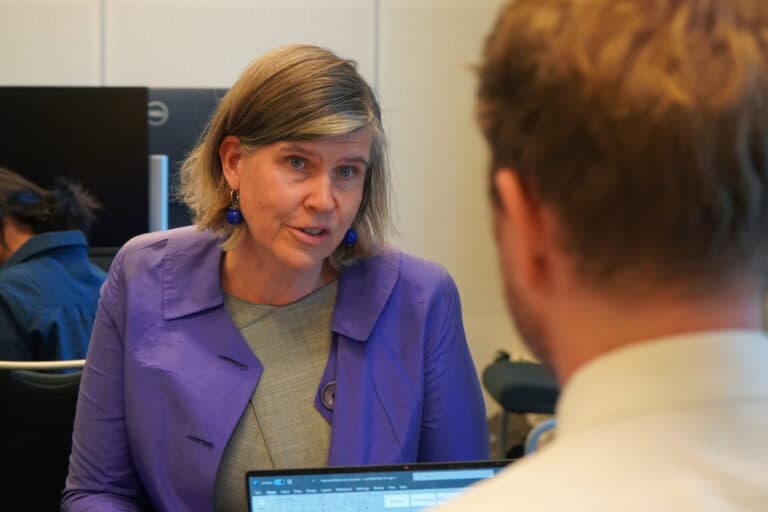
“Water diplomacy helps us to build relations and sustain relations, and really institutionalize relations,” explains SIWI’s Martina Klimes, PhD. The process extends beyond reaching an agreement: it also helps establish relationships that can sustain cooperation as circumstances change.
Water diplomacy involves more than diplomats and water officials. Decisions about energy or agriculture can affect shared water, so cooperation also requires the involvement of people responsible for those sectors.
Researchers can help participants understand water conditions and assess possible solutions. Communities bring knowledge of how decisions affect their lives, while civil society organizations can help represent interests that might otherwise be overlooked. Their involvement connects negotiations with the needs of those who depend on the water.
Who participates matters, as does their ability to influence the process. Participation needs to account for differences in authority and access to information, so that those with fewer resources can contribute meaningfully.
Water diplomacy requires a process suited to the people involved and the problem they face. Participants need to understand each other’s concerns and explore where cooperation is possible. A facilitator can help structure discussions, while the parties remain responsible for their decisions.
Developing a shared understanding of the evidence can support negotiations. Participants can work with experts to investigate questions they consider important, rather than relying on separate studies that others may distrust. This approach, known as joint fact finding, helps establish a common basis for discussing possible solutions.
Cooperation does not always require a comprehensive treaty. Participants may agree on practical arrangements for working together, even when a wider political agreement remains out of reach. Whatever form cooperation takes, the process needs to address how commitments will be implemented and how future disagreements will be handled.
Shared water can provide a reason to cooperate even when political relationships are strained. Addressing a common water problem creates opportunities for dialogue and practical collaboration. Institutions established through that cooperation can help countries manage disagreements and maintain contact during wider tensions.
The benefits depend on how cooperation develops. An arrangement that serves powerful interests while overlooking affected communities can reinforce inequalities. Meaningful participation helps ensure that cooperation addresses people’s concerns as well as relations between governments.
Water diplomacy can contribute to peace, but it cannot guarantee it or resolve wider political conflicts on its own. Its contribution may be to keep communication open and establish ways to address disputes before they escalate.
Water scarcity can sharpen competing demands over shared resources. Pollution and heavy withdrawals may reduce the water available to other users, while new infrastructure can change flows across borders. These pressures make cooperation important for protecting people’s access to water and sustaining ecosystems.
Climate change adds uncertainty. Changing rainfall and more severe droughts or floods can test existing agreements and make commitments harder to meet. Water diplomacy helps participants discuss these risks and consider how cooperation needs to adapt.
Scarcity does not inevitably lead to conflict. The ability to manage disagreements depends partly on the relationships and institutions already in place. Water diplomacy helps strengthen those arrangements before changing conditions overwhelm them.
SIWI supports cooperation over shared water by facilitating dialogue and helping participants explore ways to work together. As an independent and impartial institute, we provide space to discuss sensitive issues and understand different perspectives.
Through the Shared Waters Partnership, SIWI supports dialogue and offers advice on building trust. This work helps create conditions for cooperation in settings where political tensions can make engagement difficult.
SIWI uses experience exchange to help participants understand how their neighbours approach water challenges and make decisions. In regions affected by political tensions, these exchanges can provide opportunities to explore common concerns and learn from each other’s experience.
We also connect research with practical experience. The Routledge Handbook of Water Diplomacy, co-edited by SIWI’s Martina Klimes, brings together approaches and case studies that practitioners can use to inform their work. It examines water diplomacy within countries as well as across international borders.