






Stay informed
SIWI newsletter
Receive SIWI’s latest news, events, reports and jobs directly in your inbox.
You can unsubscribe at any time.

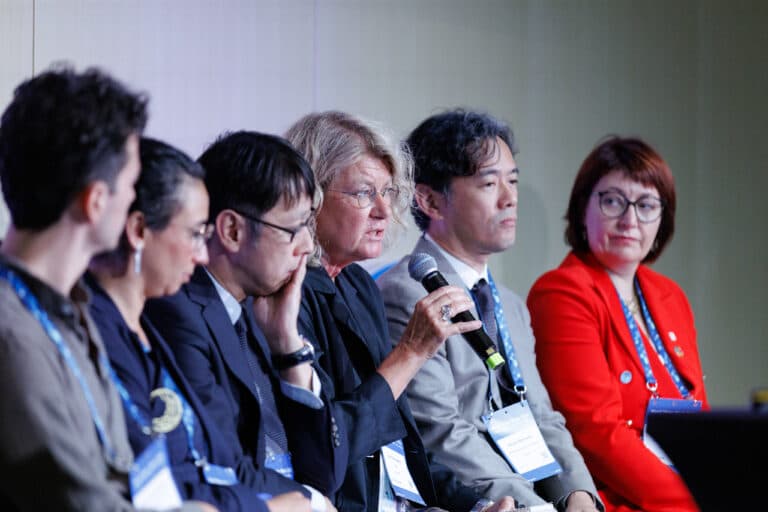
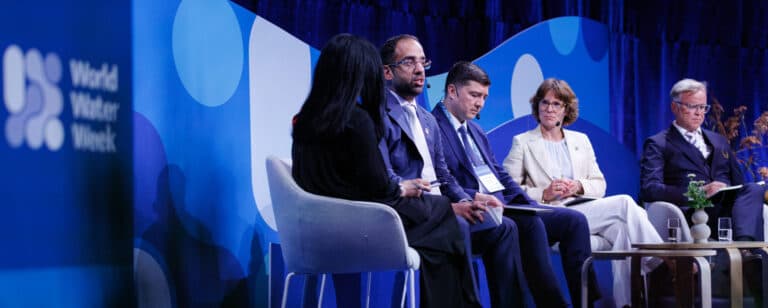
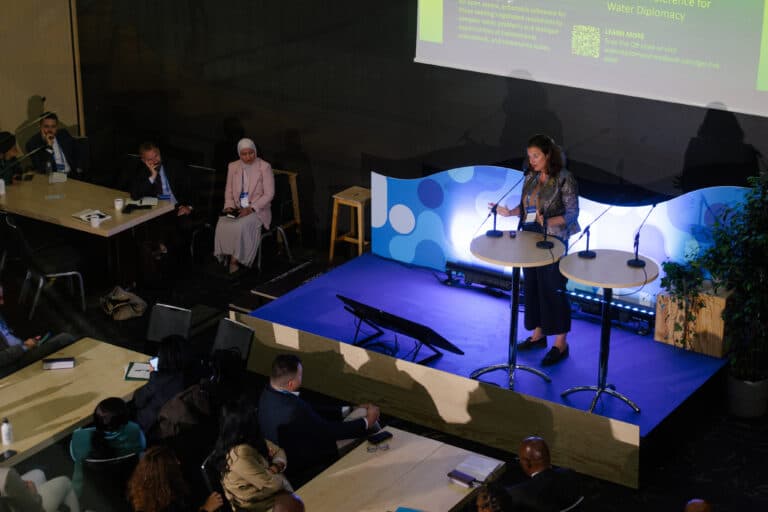
With the 2026 UN Water Conference approaching in Abu Dhabi, the discussion focused on a central question: what needs to change for investment to reach countries and communities, and what will make those investments last?
The scale of the water finance gap is considerable. But the discussion in Stockholm repeatedly returned to an important distinction: a shortage of investment is not necessarily the same thing as a shortage of available capital.
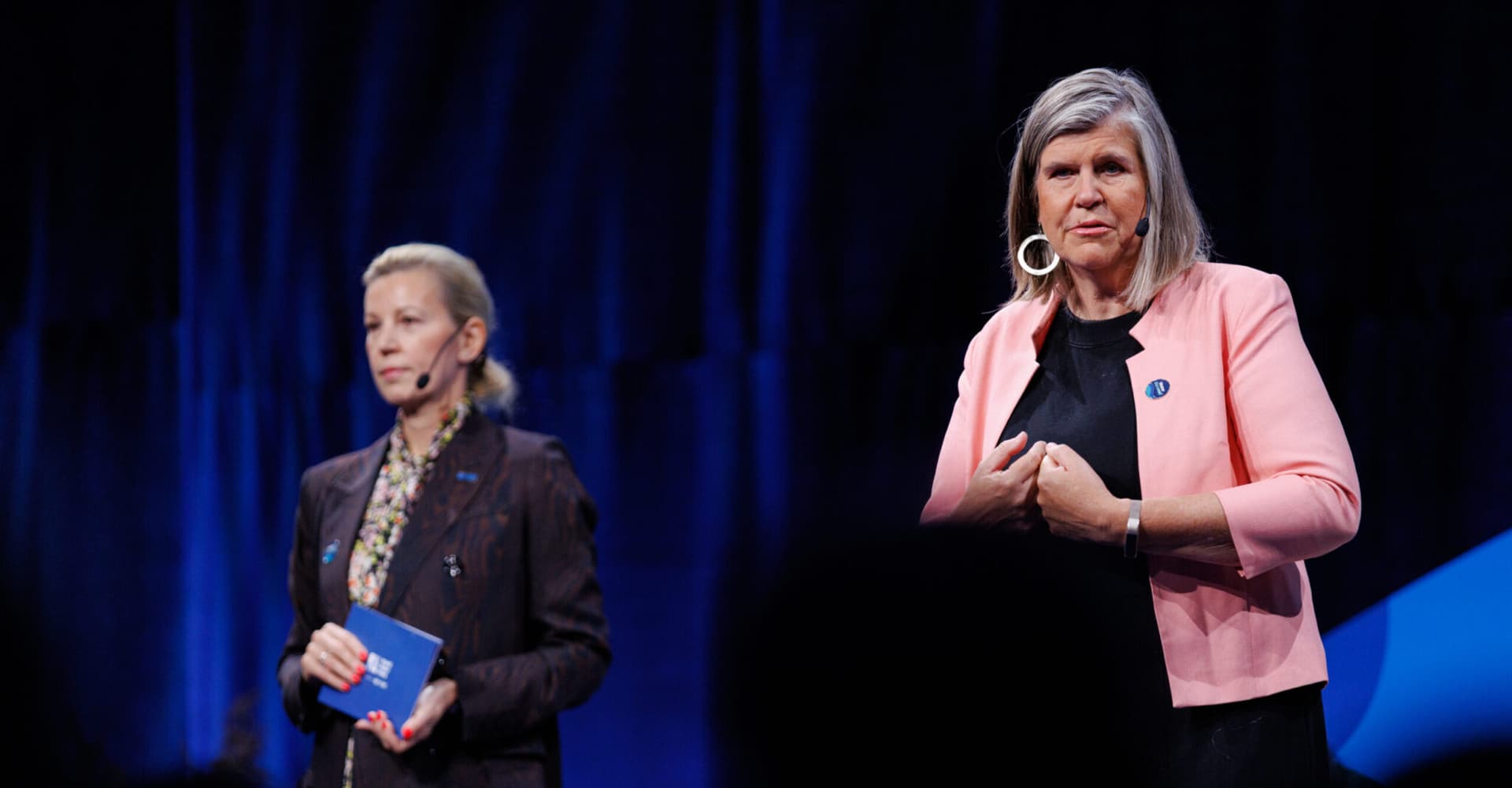
Opening the panel, SIWI Executive Director Helena Thybell argued that the challenge is not simply to find more money, but to make finance work better.
“Money will not deliver results if the systems around it don’t work,” she said. “But equally, strong policies and governance won’t deliver water services without investment. We need both.”
Meike van Ginneken, Water Envoy for the Netherlands, sharpened the point. Water services and water management ultimately have to be paid for through some combination of tariffs, taxes and transfers. Predictable revenue streams matter because finance follows them, rather than creating them.
This changes the starting point for the debate. Alongside asking how much more money can be mobilized, we need to ask: what is preventing the money that already exists from being used effectively?
Sarah Nedolast of the World Bank argued that the first priority should be getting “more water for the money” already available. That requires stronger capacity in ministries, utilities and other service providers, alongside financially viable systems capable of attracting additional investment.
Bapon Fakhruddin of the Green Climate Fund highlighted another problem. Repeatedly financing individual projects does not necessarily change the underlying system. Investment needs to create conditions for results to continue after the original financing ends, including the policies, institutional capacity and operational financing required to sustain them.
Country experiences showed what this can mean in practice. Uzbekistan described combining public investment with regulatory reform, incentives, technology and capacity development. India showed how water investment can be integrated into wider rural development programmes rather than treated as isolated projects. Senegal emphasized the need for credible, investment-ready pipelines capable of attracting and absorbing finance.
Together, these experiences point towards a shift from financing individual water projects to financing the systems that make sustained water investment possible.
Private capital will be part of this picture, but the discussion also exposed its limits.
Christopher Flensborg, Head of SEB Water, emphasized that financial institutions need understandable risks, predictable returns and greater certainty around regulation and revenue. This creates an important role for public and concessional finance in reducing risk and creating conditions in which different sources of capital can work together.
But not every water need fits easily into a conventional investment model. Van Ginneken cautioned that financing discussions often gravitate towards urban utilities, where revenue streams are easier to establish. Water investment must also reach rural water and sanitation, irrigation, wetland restoration and transboundary water management, where financing can be much more difficult.
Countries also face an increasingly complex landscape of water compacts, country platforms, climate finance mechanisms and development finance initiatives.
Van Ginneken called for greater consolidation ahead of Abu Dhabi. International institutions need to make it easier for governments to access finance and focus on implementation, rather than requiring them to navigate multiple parallel systems.
This is where Water Forward could play an important role. Led by the World Bank Group, the coalition aims to align governments, multilateral development banks, private finance and other partners around country-led Water Compacts. During the High-Level Panel, SIWI announced that it is joining Water Forward as an enabling partner.
Its value will depend not on adding another initiative, but on whether it helps align existing support around country priorities.
Drawing together the discussion, SIWI Senior Policy Manager Sara Castro Hallgren identified several priorities for international policy processes. Water needs to be better connected to climate and biodiversity finance. Data on water stress, risks and needs should be more closely linked to decisions about where money is spent. And water investment needs a stronger place in the wider financing architecture for sustainable development.
These recommendations have direct relevance for the 2026 UN Water Conference and its Interactive Dialogue on investments for water.
Closing the water finance gap will require more money. But it will also require stronger institutions, better governance, credible investment pipelines and financing models capable of sustaining results beyond individual projects.
The challenge for Abu Dhabi is therefore not only to mobilize more finance, but to create the conditions that allow it to deliver.