

Stay informed
SIWI newsletter
Receive SIWI’s latest news, events, reports and jobs directly in your inbox.
You can unsubscribe at any time.

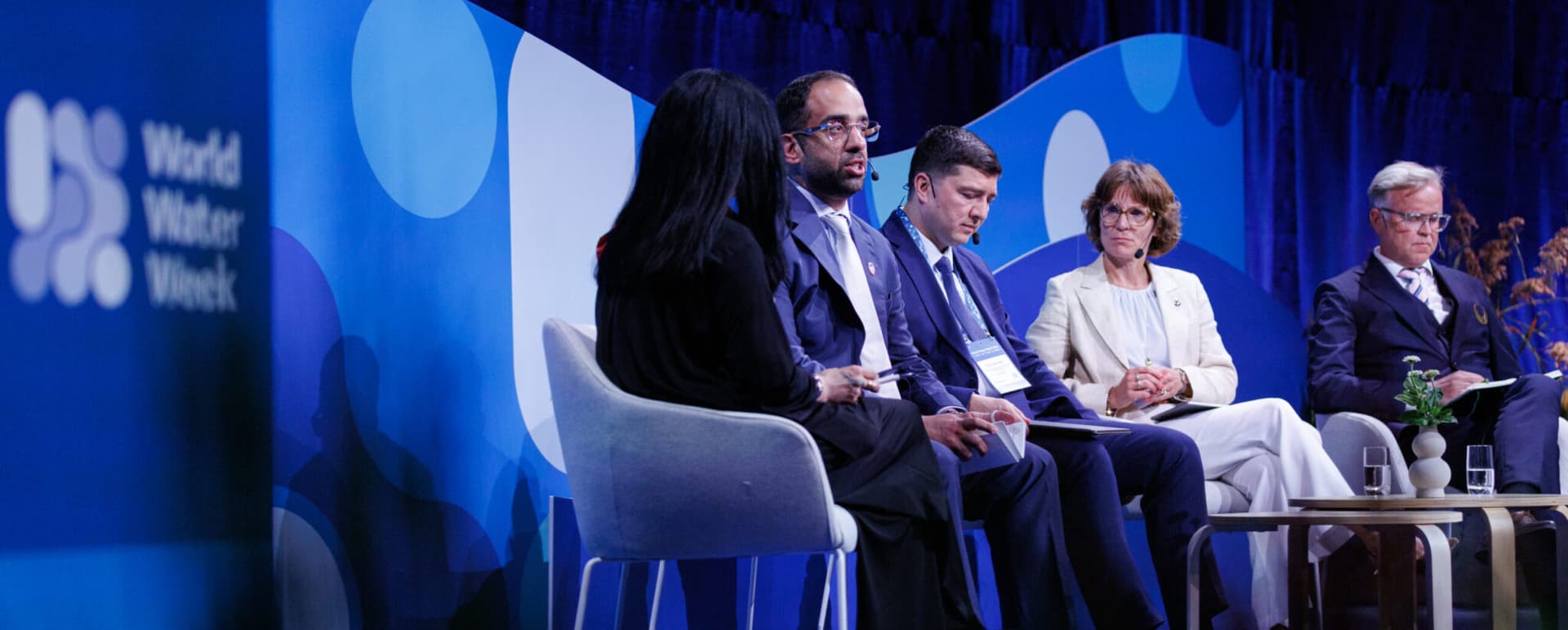
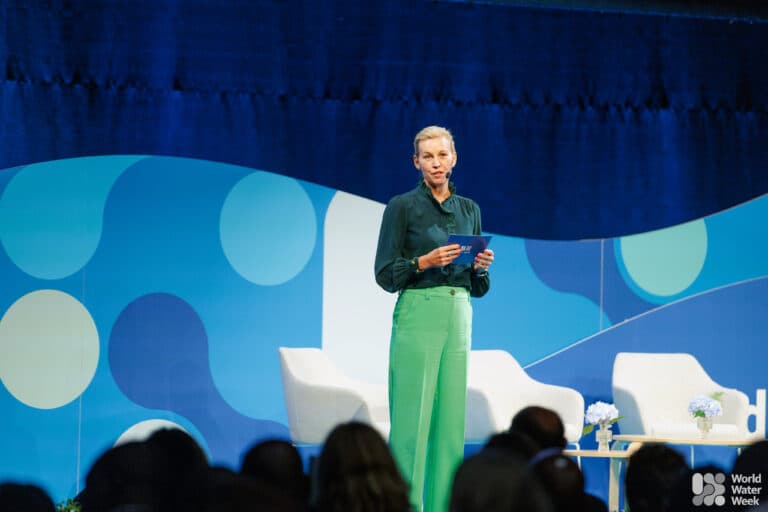
At the High-Level Panel 2026 UN Water Conference: Where the Future Will be Built, convened by the United Arab Emirates during World Water Week, governments, international organizations, finance institutions, civil society and other partners looked beyond the conference itself to a more difficult question: what needs to happen before Abu Dhabi for the conference to accelerate real progress on water?
The stakes are high. Co-hosted by the United Arab Emirates and Senegal, the December meeting will be only the third UN Water Conference in history. It will also be the first dedicated specifically to accelerating implementation of Sustainable Development Goal 6 (SDG 6), to ensure the availability and sustainable management of water and sanitation for all.
In a message ahead of the panel, Shaima Gargash of the UAE Ministry of Foreign Affairs described the conference not simply as an event, but as a process designed to “build alignment, mobilize contributions, and translate political attention into real action on water.”
That distinction matters.
Six Interactive Dialogues will structure the conference, spanning water for people, prosperity, planet and cooperation, water in multilateral processes, and investments for water. Each is co-chaired by two Member States. For the first time at a UN conference, those co-chairs were appointed almost a year in advance, creating time to develop priorities, partnerships and initiatives before delegates arrive in Abu Dhabi.
World Water Week provided an important platform for this preparatory work, hosting four of the six Interactive Dialogues alongside the UAE High-Level Panel and other discussions connected to the conference.
Opening the High-Level Panel, H.E. Abdulla Balalaa, UAE Assistant Minister of Foreign Affairs for Energy and Sustainability, emphasized the need to move beyond diagnosing water challenges towards solutions and partnerships that can deliver results.
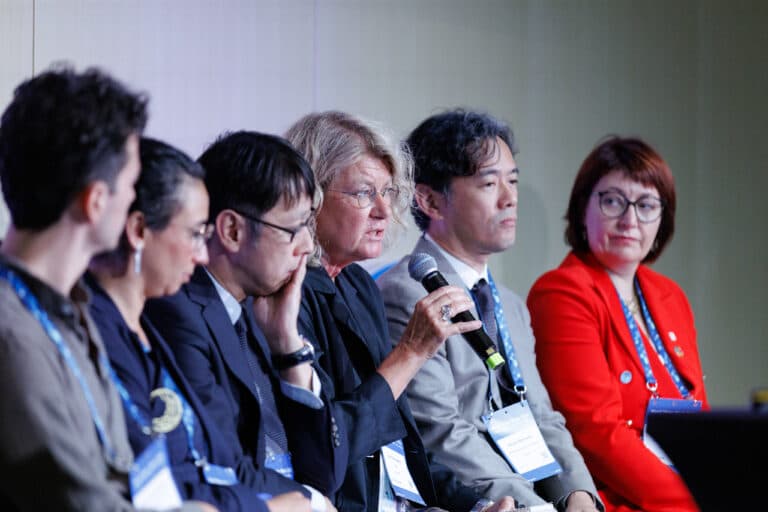
The first panel looked at national ambition and priorities. H.E. Dr Abdulla Al Jarwan, Chairman of the Abu Dhabi Department of Energy, drew on Abu Dhabi’s experience of managing water in one of the world’s most water-scarce regions, including the importance of diversified water sources, efficiency, governance and innovation.
European Commissioner Jessika Roswall connected the EU Water Resilience Strategy to preparations for Abu Dhabi, highlighting implementation, water efficiency and investment. A dedicated youth perspective from Santiago Gómez Molina, representing the Global Youth Movement for Water, also brought the priorities of younger generations into the discussion.
The second panel shifted the focus from ambition to the conditions needed to deliver it. Sareen Malik, Executive Secretary of ANEW, brought a civil society perspective, while Bapon Fakhruddin of the Green Climate Fund brought the perspective of climate finance. Mark Smith, Director General of the International Water Management Institute, highlighted the importance of knowledge and institutional capacity.
Together, the discussions pointed to a common challenge: locally grounded priorities matter, but delivering them requires functioning institutions, better data and information, appropriate technology, access to finance and cooperation across sectors and borders.
This is where the gap between commitment and implementation often becomes visible. A political commitment can set direction. Turning it into better water and sanitation services, stronger resilience or more sustainable water management requires the capacity and financing to deliver it.
The discussions at World Water Week also reinforced that water cannot be addressed in isolation.
Water connects to food and energy systems, economic development, climate resilience, public health and stability. Yet the institutions, policies and financing mechanisms responsible for these areas often continue to operate separately. That fragmentation makes implementation harder.
The preparatory process creates an opportunity to make those connections more explicit: between global ambition and national priorities, between governments and investors, and between water and the wider economic and development decisions that determine how it is managed.
This is also where World Water Week can contribute. By bringing different sectors and perspectives together ahead of major international milestones, it creates space to identify barriers, develop ideas and build relationships that can support implementation.
In the concluding remarks, Mohamed CBC Diatta, Senegal’s Sherpa for the 2026 UN Water Conference, returned the focus to the ambition countries and partners need to bring to Abu Dhabi and the importance of developing concrete initiatives and projects ahead of the conference.
The strongest message from the High-Level Panel was ultimately a straightforward one: meaningful participation begins well before delegates arrive in Abu Dhabi.
As Shaima Gargash put it: “Meaningful participation in this conference is not something you do in December. It’s something you build now.”
The 2026 UN Water Conference offers a rare moment of global political attention on water. The opportunity now is to use the months ahead to turn that attention into stronger partnerships, better prepared commitments and practical solutions that can endure beyond December.
Because the measure of Abu Dhabi will not ultimately be what happens during three days of conference. It will be what those three days make possible afterwards.
Watch the High-Level Panel
Registered for World Water Week 2026? Watch 2026 UN Water Conference: Where the Future Will be Built on demand on the World Water Week digital platform. Access the platform using the personal link you received ahead of World Water Week.
Watch: The road to the 2026 UN Water Conference
Hear Shaima Gargash of the UAE Ministry of Foreign Affairs explain how the preparatory process is building towards Abu Dhabi and why engagement needs to start now.
Watch Shaima Gargash’s message