












Stay informed
SIWI newsletter
Receive SIWI’s latest news, events, reports and jobs directly in your inbox.
You can unsubscribe at any time.




As climate volatility intensifies, water systems worldwide are entering a new era of instability and South–South learning — the exchange of knowledge, experience and practical solutions among Asian and African countries facing similar water related climate challenges — has moved from a nice-to-have to an operational necessity. Rivers are becoming more unpredictable, groundwater is declining in intensively farmed regions, and floods and droughts are striking within the same season. Countries hit hardest by these shifts often face similar problems, yet knowledge and proven solutions hardly move fast enough between them. That gap, more than a dearth of ideas, is the real barrier to a just and climate-resilient water future.
Across South Asia and parts of Africa, water stress is taking different forms but stems from a common reality. Falling groundwater in India’s Indo-Gangetic plains, salinity intrusion in coastal Bangladesh, changing rainfall in Nepal, and climate extremes in Pakistan and Sri Lanka are all exposing the limits of water systems designed for a more stable climate. Despite their different geographies, these regions face the shared challenge of adapting to unpredictable rainfall, floods and droughts. For decades, water innovation followed a one-way model, with knowledge transferred from one region to another. While this delivered important gains, it is less suited to a world where climate impacts are uneven and highly localized. Today, many effective solutions are emerging and South–South learning is helping bridge the gap between proven solutions and where they are needed most.
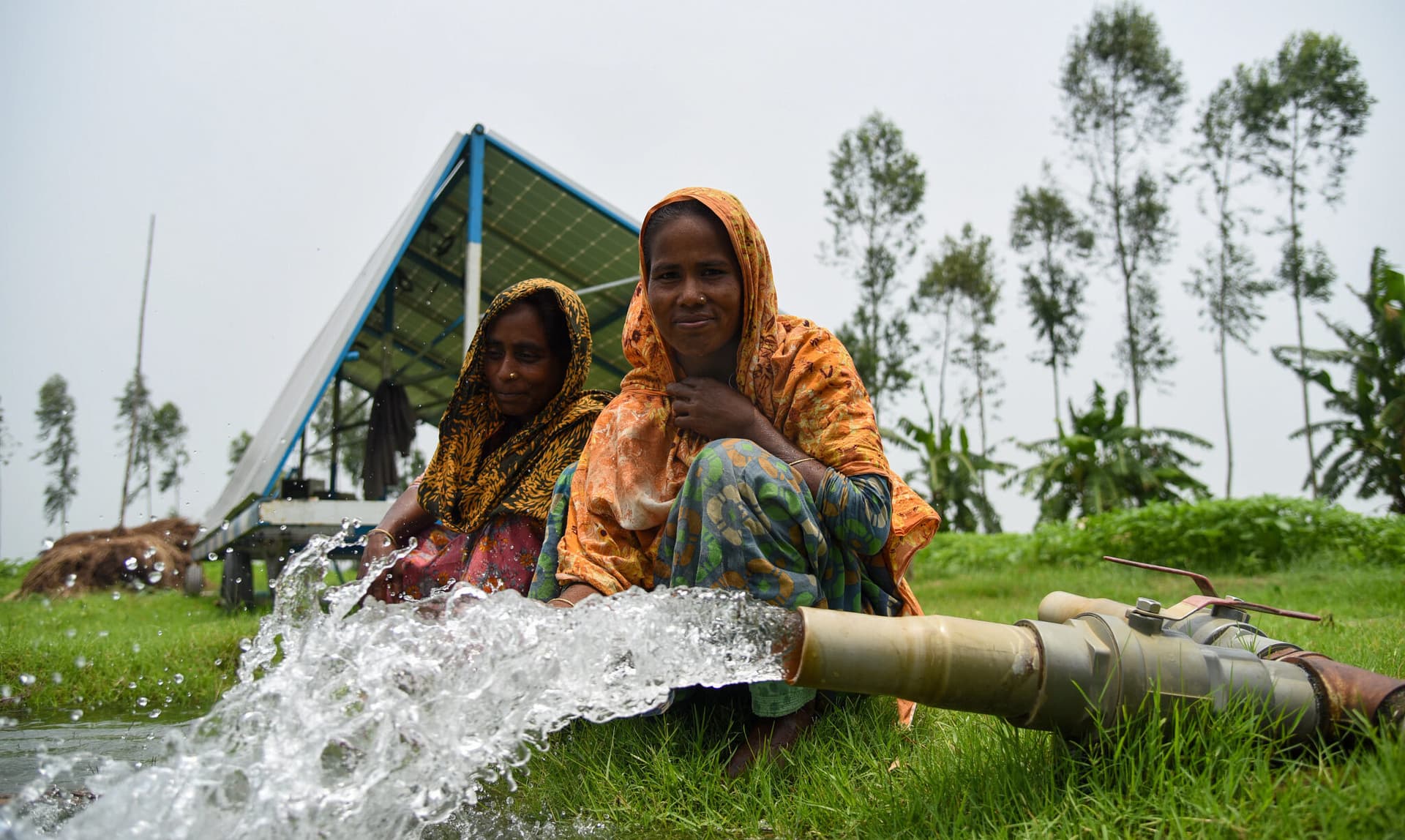
South Asia’s long experience with water stress makes it a valuable laboratory for climate adaptation. In India, the Atal Bhujal Yojana programme demonstrates how community-based groundwater management—through participatory water budgeting, local aquifer monitoring and decentralized planning—can strengthen water governance, while also revealing that community action alone is insufficient without supportive institutions. Meanwhile, solar irrigation pilots implemented by International Water Management Institute (IWMI) across the region illustrate a similar lesson: clean energy can improve irrigation access, but without governance safeguards, it may accelerate groundwater depletion rather than reduce it. Bangladesh and Nepal offer complementary insights. In Bangladesh’s coastal delta, responses to salinity intrusion and tidal flooding have shown that durable adaptation depends as much on community institutions and local planning as on technical innovations. In Nepal, community-managed spring rejuvenation demonstrates how ecosystem restoration can improve water security by reconnecting land management with hydrological processes. Together, these experiences underline that effective water solutions combine technical innovation with strong local institutions and adapt to ecological and social realities rather than applying one-size-fits-all models. Rather than exporting fixed models, these experiences show the value of helping countries diagnose their own water–climate challenges and adapt lessons from elsewhere to their own ecological, social and institutional contexts.

Gobinda Oli irrigates vegetable land in Gorbakot Municipality in Nepal. Photo: Nabin Baral/IWMI
Communities across Africa are also adapting to water uncertainty through locally grounded solutions that combine innovation, institutions and ecosystem management. In Kenya and Ethiopia’s drylands, real-time drought monitoring, community-based data collection and early warning systems are helping pastoralists make more informed decisions on livestock mobility, grazing and water access, demonstrating that climate information is most effective when embedded in local institutions and indigenous knowledge. In Niger, Farmer-Managed Natural Regeneration has restored millions of hectares of degraded land through locally led stewardship, creating a model now studied well beyond West Africa. In South Africa’s drought-prone Karoo region, managed aquifer recharge is helping communities store excess rainfall underground for use during dry periods, illustrating how nature-based infrastructure can strengthen long-term water resilience. Successful adaptation depends not on a single technology or policy, but on combining local knowledge, community leadership and context-specific innovation to build resilience under climate uncertainty. These examples matter beyond their own geographies. Initiatives on groundwater governance in India offer lessons for Ethiopia’s aquifer management; Bangladesh’s saline agriculture experience could inform coastal West Africa; Nepal’s spring revival approaches may apply to African highland catchments facing similar recharge challenges; and Southern Africa’s drought planning could guide water-stressed basins in South Asia.
South-South learning can offer cost and time effective pathways to design and scale water solutions. Yet many locally grounded solutions across South Asia and Africa remain confined to pilot projects or national borders. The barriers are familiar: limited financing, fragmented institutions, weak documentation of local innovation and too few platforms for sustained peer-to-peer learning. Scaling these projects will require stronger national investment, better institutional coordination, regional knowledge platforms, blended finance and long-term partnerships that connect researchers, policymakers, practitioners and communities.

Farmers in Zimbabwe use solar power to pump water for their vegetable gardens through drip irrigation. Photo: David Brazier/IWMI
Recognizing this gap, water institutions are now moving beyond producing evidence. They are connecting research with practice by bringing policymakers, practitioners and communities together. The focus is shifting from isolated “best practices” to adaptive learning systems, where knowledge is shared, refined and applied in different contexts.
As World Water Week 2026 highlights the need for a more just and water-secure future, South–South learning should become a central pillar of global water action, not an afterthought. The most effective water solutions will emerge not from a single institution or geography, but from the exchange and adaptation of knowledge between regions facing shared climate challenges. Ultimately, water security will depend less on where knowledge is produced than on how quickly it can be shared and put into practice.