









Stay informed
SIWI newsletter
Receive SIWI’s latest news, events, reports and jobs directly in your inbox.
You can unsubscribe at any time.


For much of the past two decades, those of us working on water have focused on showing why water matters to business. Today, I find myself having a very different conversation. Whether with business leaders, investors or policymakers, the question is no longer whether water matters, but how to act on that recognition.
Companies understand that reliable water supplies underpin manufacturing, food production, energy systems, digital infrastructure and global supply chains. Investors increasingly assess water-related risks. Governments recognize that water security influences economic resilience, industrial competitiveness and climate adaptation. Water has moved from the margins of sustainability reporting to the centre of strategic decision-making.
Yet there is a paradox. Over the past year, I have seen this shift play out across climate, finance and water discussions alike. Businesses increasingly understand the risks. What has changed far less are the institutions needed to act on them.
Recognition has grown rapidly, but implementation has not kept pace. If businesses increasingly understand the challenge, why is progress still falling short of what is needed?
The answer is not simply a lack of finance, technology or innovation. Around the world, promising solutions exist, capital is available, and successful projects demonstrate that progress is possible. The gap is no longer in understanding the problem. It is in creating the conditions for collective action.
Many of the barriers are institutional rather than technical. Water creates value across economies, yet responsibility for managing it is often fragmented across sectors, organizations and levels of government. That disconnect is also reflected in investment. Although water has become the top adaptation priority in the national climate plans of 134 countries, less than 3 percent of tracked global climate finance currently reaches water-related projects. Regulatory frameworks can be uncertain. Investment models frequently struggle to capture the multiple benefits that water projects create. Businesses, governments and investors may all recognize the same risks while working within systems that encourage separate rather than shared decision-making.
In other words, the conversation around water has changed faster than the way governments, businesses and financial institutions work together to address it.
Implementation has become the defining challenge because different parts of society must work together to remove the barriers that prevent action.
Water cannot be managed by one company, one sector or one government acting alone. Decisions made by businesses influence communities and river basins. Public policy shapes investment decisions. Financial institutions determine which projects receive funding. Researchers provide the evidence that underpins better choices. Success increasingly depends on how well these different actors understand one another and work towards shared outcomes.
The challenge is creating the governance conditions that enable solutions to be implemented at scale. This requires effective regulation, the right incentives and greater transparency.
That is why water has become a leadership challenge as much as a resource challenge. Leaders are no longer asked simply to manage risks within their own organizations. They are increasingly expected to navigate interconnected risks that cross sectors, supply chains, and institutional boundaries.
Good governance is not an abstract concept. Clear regulation, the right incentives and greater transparency create the conditions for businesses, governments and investors to work together. Without those conditions, awareness alone will not deliver the transformation that growing water risks demand.
As the decisions shaping our water future are increasingly made in boardrooms, finance ministries, investment committees and infrastructure planning processes, conversations about water must also broaden. Solving today’s challenges requires business leaders, policymakers, investors, researchers, utilities and communities to engage with one another, not occasionally, but as part of a shared effort to build more resilient economies and societies.
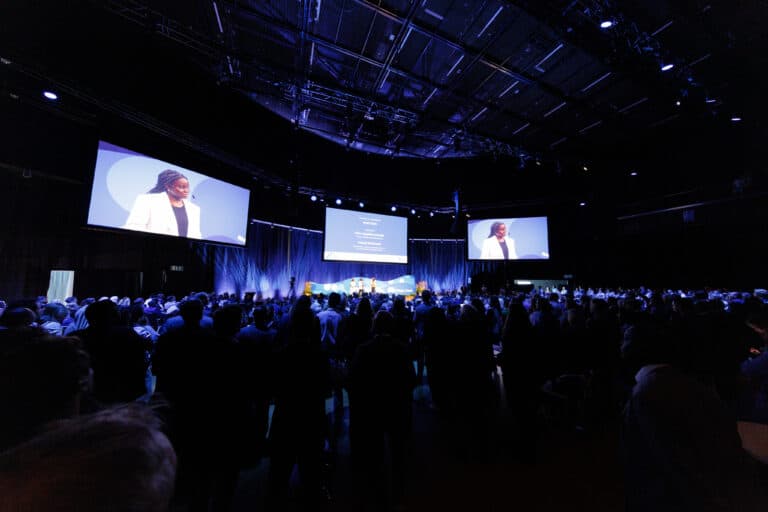
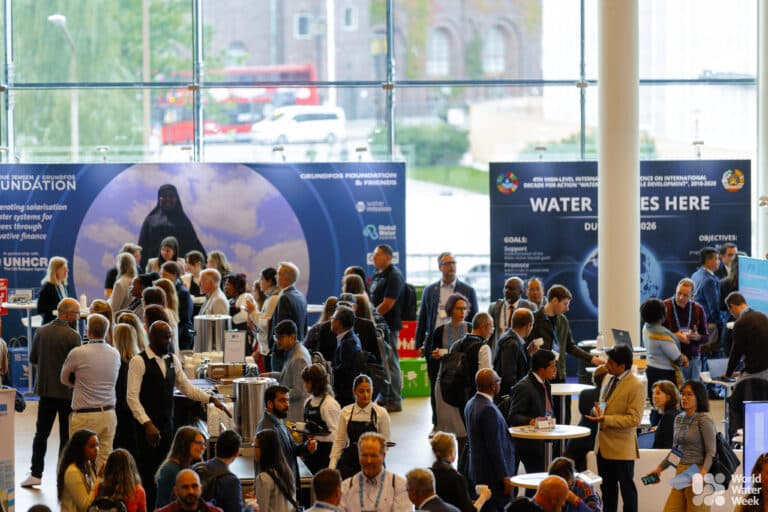
That is where World Water Week has an important role to play. It provides a space where these different perspectives come together because water has become more connected. The conversations are no longer simply about managing water resources. They are about removing the barriers that stand between growing recognition and meaningful implementation.
The future of water will not be decided by the water sector alone. It will be shaped by the quality of the decisions made across business, finance, government and society. The better we align those efforts, the better our chances of turning understanding into action and ambition into lasting progress.