




Stay informed
SIWI newsletter
Receive SIWI’s latest news, events, reports and jobs directly in your inbox.
You can unsubscribe at any time.

Water has returned to the highest levels of international discussion. In December, the United Arab Emirates and Senegal will co-host the 2026 UN Water Conference in Abu Dhabi, to accelerate implementation of SDG 6. Its six Interactive Dialogues will address people, prosperity, the planet, cooperation, multilateral processes and investment.
That creates an opportunity, but it does not guarantee a turning point. The harder question is whether the Conference will help countries and institutions act differently once it is over and sustain that momentum through to the 2028 UN Water Conference. What decisions will it advance? Who will take them forward? And how will anyone know whether they have made a difference?
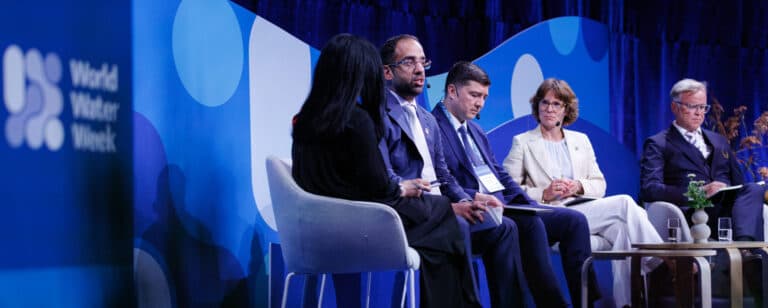
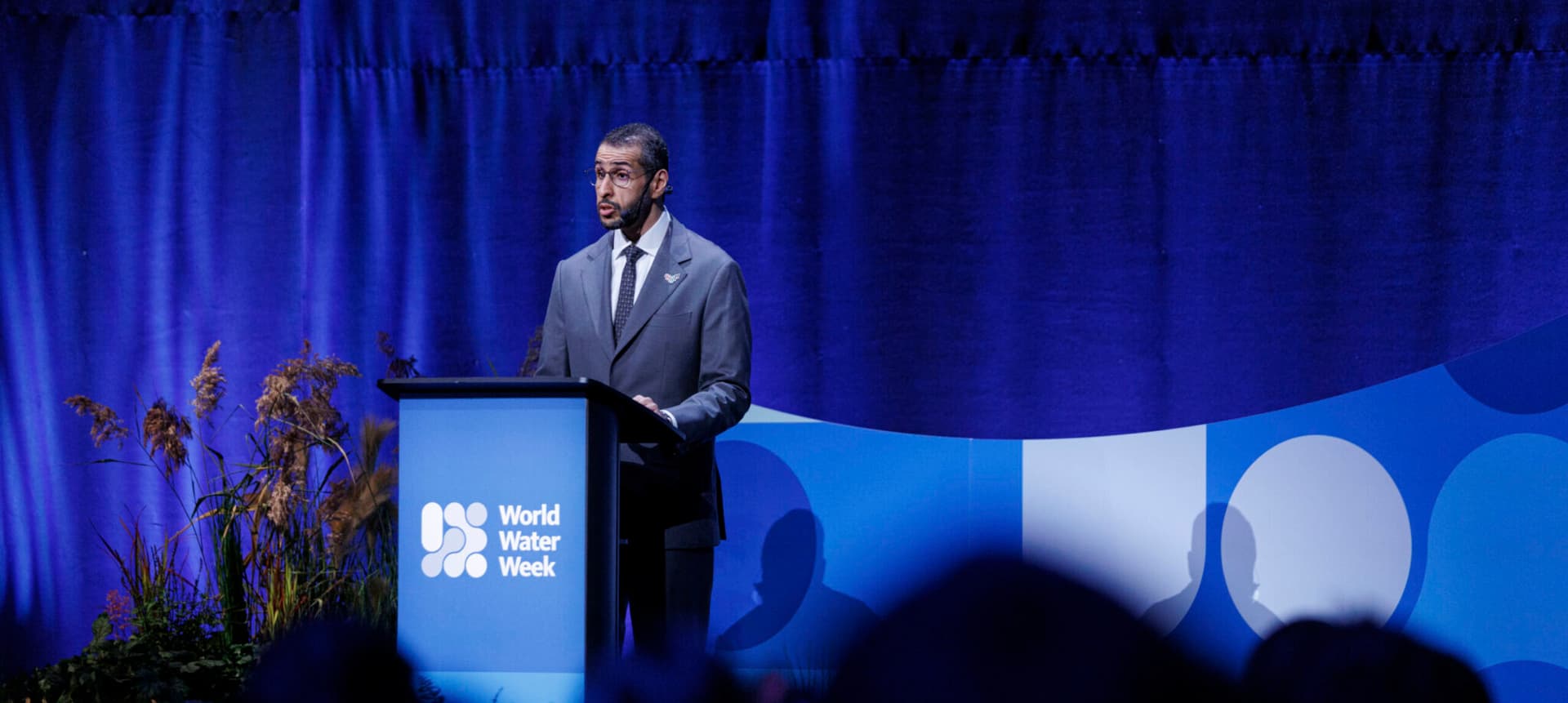
H.E. Abdulla Balalaa, the UAE’s Assistant Minister of Foreign Affairs for Energy and Sustainability, is leading his country’s preparations as co-host of the Conference. At World Water Week, he put the challenge plainly: “Our challenge is no longer simply knowing what to do. Our challenge is doing it faster, but also with greater scale and where it matters the most.”
He called for stronger connections between policy and finance, innovation and deployment, and commitments and accountability. For H.E. Balalaa, success will be judged after the delegates leave Abu Dhabi: by partnerships that move into implementation, finance that reaches solutions and tangible differences in people’s lives.
Dr Mohamed C.B.C. Diatta, Senegal’s Sherpa for the 2026 UN Water Conference, stressed the role of political leadership in turning ambition into action. “We need really strong political leadership,” he said, “to push the water agenda and to take a real impact decision on the ground.”
Political attention can open doors that individual organizations cannot open alone. Yet a commitment, however welcome, does not explain who will deliver it or how. The stronger measure is whether participants leave Abu Dhabi with clearer priorities, people responsible for pursuing them and the means to act.
The proposed Flagship Initiatives offer one way to make that ambition more concrete. Developed through the Conference’s Interactive Dialogues, they are intended to bring partners together around actions that can continue beyond Abu Dhabi. H.E. Balalaa has described them as a focus of the co-chairs’ work towards outcomes that can be implemented.
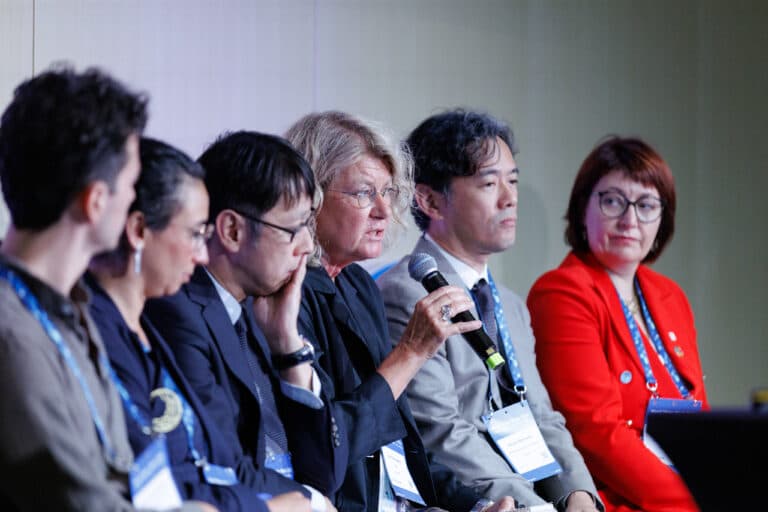
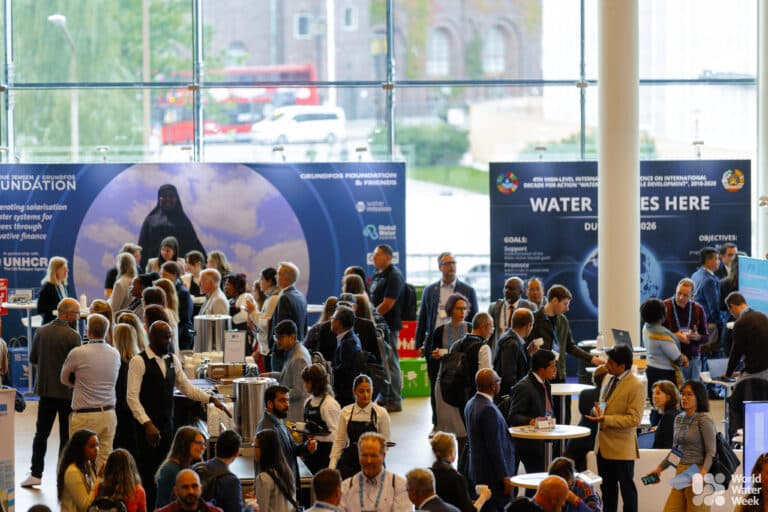
At World Water Week, four of the Interactive Dialogues held stakeholder consultations to test ideas still being developed. The discussion on Water for People, for example, explored possible initiatives to strengthen services and financing. Participants also pressed for greater clarity about who would lead proposals and where the resources would come from. The Water for Planet dialogue considered several possible Flagship Initiatives and emphasized the need to design them so that they support work across the dialogues.
Beyond individual initiatives, Germany and Mexico, co-chairs of the Interactive Dialogue on Water in Multilateral Processes, are exploring a broader global governance framework through their “Building a House for Water” proposal. Its proposed building blocks include regular UN Water Conferences, stronger coordination across the UN system and systematic stakeholder participation, with closer links between implementation, financing and governance. These ideas remain under discussion, but address a central question: how to sustain coordinated action on water beyond the Conference.
Delivery also requires attention after the Conference. Henk Ovink, Professor of Water Cycle Diplomacy and Design at TU Delft, who helped shape the 2023 UN Water Conference, warns that the international community is still “hopping from conference to conference”. The 2023, 2026 and 2028 meetings could instead form part of a continuous process, with clear preparation, partnerships, follow-up and accountability.
“What we need is an agreement on a process that is continuous, but also accountable and transparent, where preparation and follow-up are as important as the meeting itself,” he told SIWI. Such a process would make it easier to see which commitments and initiatives are advancing, where progress has stalled and who is responsible for responding.
Diatta made a related point from the co-host’s perspective. Senegal wants to work with Tajikistan, which will host the 2028 Conference, because “it’s not a standalone conference”. He also called for the outcomes from Abu Dhabi to inform the 2027 SDG Summit. The years between conferences matter as much as the events themselves.
Preparations for that next stage are already advancing. On 2 September 2026, the UN General Assembly adopted resolution 80/304, setting out arrangements for the 2028 UN Water Conference in Dushanbe, Tajikistan, on 4–6 May. The Conference will review progress over the Water Action Decade and identify obstacles to achieving global water goals.
A turning point will therefore be visible after the delegates leave. If the Conference advances Flagship Initiatives with clear ownership and success criteria, gives partners the means to act and creates a credible way to track progress, its influence can extend well beyond three days in December. Through our involvement in several Flagship Initiatives, SIWI will help partners turn proposals into sustained cooperation and practical action beyond Abu Dhabi.