







Stay informed
SIWI newsletter
Receive SIWI’s latest news, events, reports and jobs directly in your inbox.
You can unsubscribe at any time.

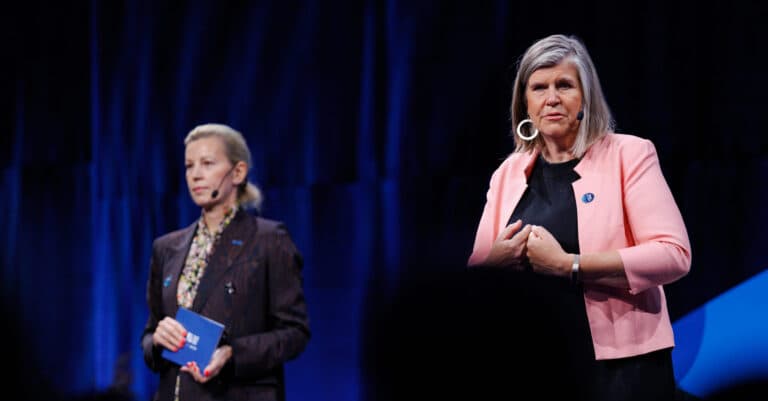
Helena Thybell, Executive Director, SIWI
Somya Joshi, Research Director, SEI
Martina Klimes, Thematic Lead and Senior Advisor, SIWI
Biljana Macura, Senior Research Fellow, SEI
This article is a translated version of the original Swedish op-ed published in Dagens Industri on 27 August 2026. It was co-authored by Helena Thybell, Executive Director, SIWI; Somya Joshi, Research Director, SEI; Martina Klimes, Thematic Lead and Advisor, SIWI; and Biljana Macura, Senior Research Fellow, SEI.
On 30 July, the Swedish government announced that Sweden would co-finance an AI facility in Finland, as part of the EU’s investment in AI gigafactories. In its Swedish AI strategy, the government also states that it would like to see one of the EU’s future AI gigafactories located in Sweden.
This is a logical consequence of the government’s ambition for Sweden to become one of the world’s top 10 countries in AI. But there is a gap. The AI strategy highlights the need for energy, cooling and expanded computing capacity. Yet water – a critical resource in AI’s physical infrastructure – is not addressed as part of infrastructure planning. The rapid expansion makes it particularly important to highlight the role of water.
As with all long-term planning, today’s investment decisions affect people beyond those making them. Since the rollout of AI infrastructure has only just begun, Sweden has a good opportunity to plan for sustainable water management for current and future generations.
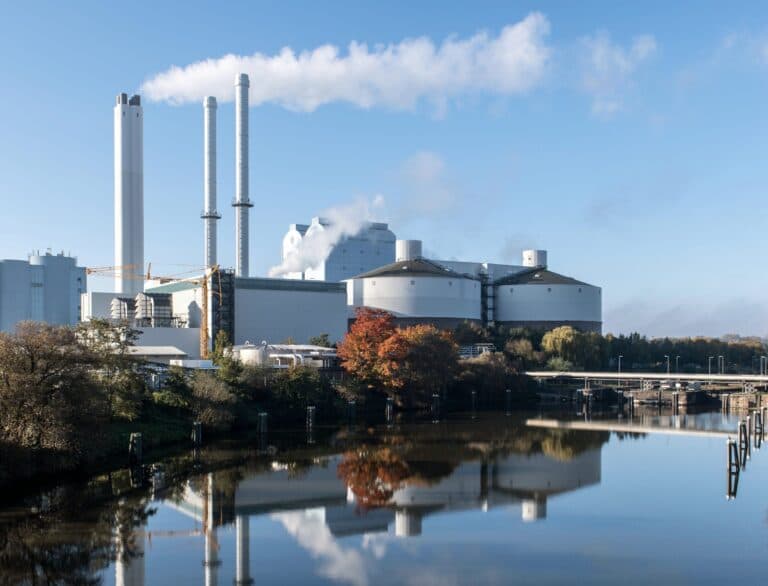
Artificial intelligence is not just software and algorithms. Behind these services is a physical value chain in which water is used in semiconductor manufacturing, in parts of electricity generation and to cool data centres. For developments in Sweden, this means that water needs to be considered in the planning and permitting of AI infrastructure, since Sweden’s water management is affected. Research shows that data centres’ water use can have significant local impacts depending on location, water availability and technology.
There is a difference between a water footprint and water management. A water footprint describes how much water is used. Water management is about where and when water is used, under what conditions, how different needs are balanced against one another, and who gets to participate when decisions are made. Focusing only on AI’s water consumption misses the fact that water is shared between countries, communities and sectors. Where a data centre is located in Sweden therefore matters, since the same type of facility can have very different effects on water use depending on location, climate, water source and cooling technology.
Even in a water-rich country such as Sweden, there are regional differences in water availability. The Geological Survey of Sweden is currently warning of a risk of water shortages due to low groundwater levels in 14 counties. Staffanstorp in Skåne illustrates why location matters. Microsoft has one of its data centres here, in a region that is repeatedly affected by low groundwater levels. This does not mean that the data centre is causing water shortages, but it illustrates why major resource users need to be assessed in relation to local water conditions and alongside households, agriculture, other businesses and ecosystems.
We see three areas where Sweden can and should act now:
First, water must become an explicit part of planning for AI and digital infrastructure. The government’s AI strategy already addresses energy, cooling and location. It needs to be complemented by consideration of water availability, particularly for major developments.
Second, better access to information about water use is needed. EU rules include requirements for data centres to report their water use. Sweden should build on this so that municipalities, water authorities and affected actors have access to information about water withdrawals and consumption, cooling technologies and seasonal variations, to support planning and dialogue.
Third, impacts on water need to be assessed at the right geographical scale. Water does not follow boundaries; it crosses them. It is therefore not enough to assess a development only within the municipality where it is located. Water management needs to consider the entire river basin.
At the same time, solutions are available if water is considered early. Cooling technologies can, for example, reduce the need for freshwater, and research shows that treated wastewater can be used to cool data centres. Good planning and collaboration can both reduce risks and encourage innovative solutions for making better use of shared water resources.
The question is not whether digital infrastructure should be built, but how it can be developed sustainably over time and how the shared resources on which digital development depends are managed.
As Sweden takes the next step in expanding its AI infrastructure, water needs to be considered from the outset. National and local government, water authorities, businesses, researchers and those affected by new developments all need to be part of the solution.